

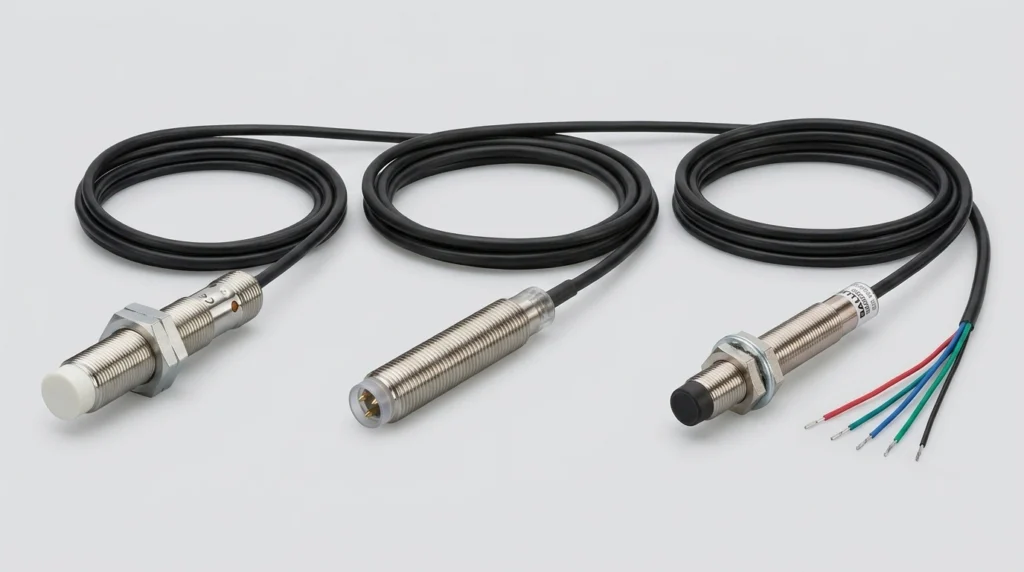
IFM Electronic Sensors: Product Guide for IFM204, BES013N, BES02F0 and IFM Sensor Cables
Master your setup with IFM sensors and cables. Decode the IFM204, clarify Balluff cross-references, check wiring steps, and configure IO-Link masters.
The short answer: for new designs, choose between the Siemens SIMATIC S7-1200 and the SIMATIC S7-1500 – the S7-300 is officially in end-of-life phase and should not be used as a base for new projects. The right pick between the two active series depends on application complexity, I/O volume, motion requirements, and budget. This guide breaks down exactly where each controller fits – and where it doesn’t.
According to Markets and Markets, the global industrial automation market is projected to reach $435 billion by 2030, with PLC-based systems remaining the dominant control architecture in discrete and process manufacturing. Choosing the right controller from the start directly affects total project cost, commissioning time, and long-term scalability.
The SIMATIC S7-300 built a strong reputation over decades of factory use – it powered thousands of lines across automotive, food & beverage, and chemical industries. That history doesn’t disappear overnight.
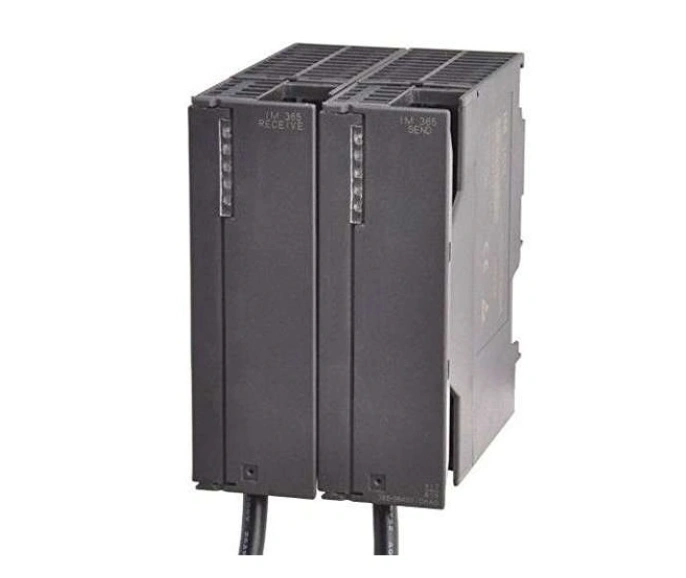
Siemens confirmed the phase-out of both the S7-300 and S7-400 series, with mainstream support ending and new orders becoming increasingly restricted. Spare parts remain available through distributors like Zancot, but designing a new machine around legacy hardware adds unnecessary risk.
The primary migration target is the SIMATIC S7-1500. Siemens provides dedicated migration tools within TIA Portal that help convert existing S7-300 programs, reducing the manual effort of a full platform transition. For smaller machines with limited I/O that were running on compact S7-300 CPUs, the Siemens SIMATIC S7-1200 is often the more cost-effective replacement.
Pro tip: TIA Portal V13 and later support all three series, though S7-300 is treated as read-only for new feature development. Migration to S7-1500 unlocks active TIA Portal tooling, including integrated diagnostics and version control.
The Siemens SIMATIC S7-1200 targets applications where a compact, cost-efficient controller is enough – standalone machines, conveyor segments, packaging units, HVAC systems, and small process loops. It fits in a compact housing with onboard I/O and integrated PROFINET, without the overhead of a full modular rack.
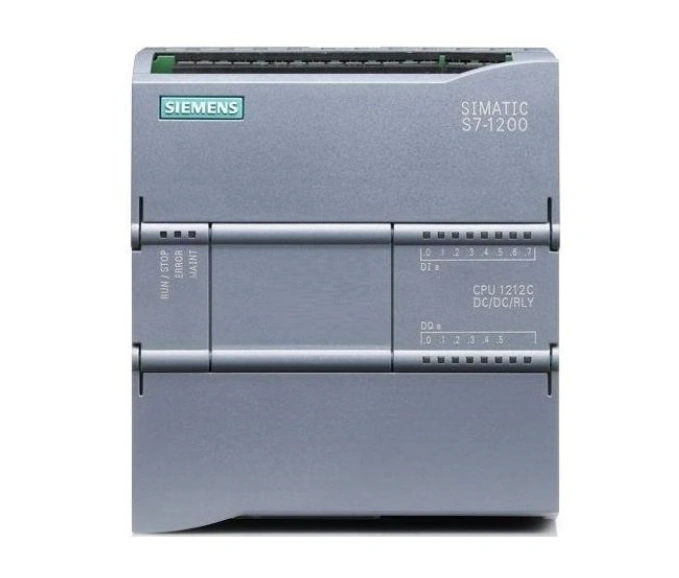
The S7-1200 line includes five main CPU variants, each stepping up in I/O capacity, work memory, and communication options:
| CPU | Onboard I/O | Work Memory | Key Feature |
| CPU 1211C | 6 DI / 4 DO / 2 AI | 50 KB | Minimal footprint tasks |
| CPU 1212C | 8 DI / 6 DO / 2 AI | 75 KB | Entry-level machine control |
| CPU 1214C | 14 DI / 10 DO / 2 AI | 100 KB | Most common general-purpose choice |
| CPU 1215C | 14 DI / 10 DO / 2 AI | 125 KB | Dual PROFINET port, line topology |
| CPU 1217C | 14 DI / 10 DO / 2 AI | 150 KB | Encoder feedback, highest S7-1200 performance |
All variants of the Siemens SIMATIC S7-1200 scale up to 1,024 I/O points through expansion modules. Onboard analog I/O is included across the range – something competing compact PLCs often lack without an additional module.
The Siemens SIMATIC S7-1200 supports up to four motion control axes through TIA Portal’s Motion Control function blocks. It connects to Siemens SINAMICS VFDs via PROFINET, USS, or Modbus RTU – a solid setup for single-axis positioning or basic speed regulation.
The boundary worth knowing: coordinated multi-axis motion – cam profiles, electronic gearing, synchronized axes – exceeds what the S7-1200 is designed for. That’s where the S7-1500 takes over.
A dedicated SIMATIC S7-1200 F-CPU variant handles functional safety applications, certified to SIL 2 (IEC 62443) and PLd (ISO 13849). It supports PROFISAFE communication and suits moderate safety requirements on standalone machines.
For complex safety architectures spanning multiple stations or larger distributed I/O trees, the SIMATIC S7-1500 offers broader PROFISAFE topology options and a wider range of compatible safety I/O modules.
The SIMATIC S7-1500 operates at a different performance level. The CPU 1518 – the top of the standard range – executes bit instructions in as little as 1 nanosecond, making it suitable for high-speed packaging, press controls, and multi-axis motion systems where cycle time directly affects output quality.
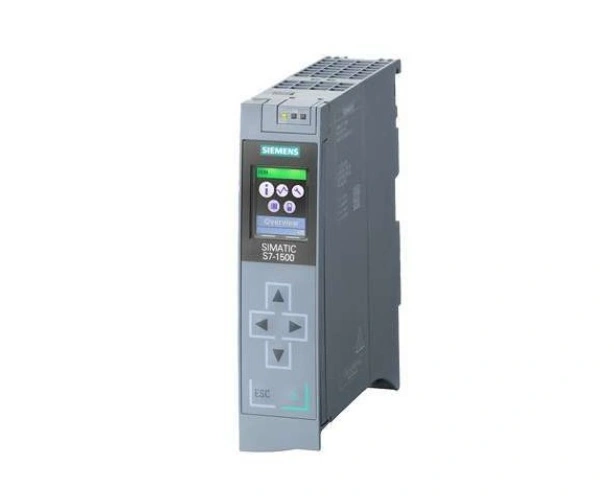
Work memory scales from 150 KB on the entry CPU 1511 up to 60 MB on high-end variants, with processing headroom that the S7-1200 simply cannot match.
Beyond raw speed, the S7-1500 includes features that become necessary in complex or plant-wide architectures:
With the S7-1500 and SINAMICS S120 or S210, the integration is substantially tighter. Drive parameters can be read and written directly from the PLC program. Drive diagnostic data appears natively inside TIA Portal’s device view – no separate tool or HMI layer required.
The S7-1200 connects to SINAMICS drives and handles them well for single-axis tasks, but it lacks the deep parameter-level integration and IRT-based synchronization that makes the S7-1500 the right call for coordinated motion.
| Feature | S7-300 (Legacy) | Siemens SIMATIC S7-1200 | SIMATIC S7-1500 |
| Lifecycle status | End-of-sale | Active | Active |
| Max work memory | 2 MB (CPU 319) | 4 MB (CPU 1217C) | Up to 60 MB (CPU 1518) |
| Bit instruction time | ~0.1 µs | ~0.08 µs | As low as 1 ns |
| PROFINET | Select CPUs | All CPUs | All CPUs, multi-port |
| OPC UA server | No | Yes (FW V4.4+) | Yes (FW V2.0+) |
| F-CPU / Safety | Yes | Yes (limited) | Yes (full PROFISAFE) |
| Motion control | Basic | Up to 4 axes | Multi-axis, synchronized |
| Distributed I/O | ET200M, ET200S | ET200S, ET200SP | ET200S, ET200SP, ET200MP |
| Price tier | – | Budget–mid | Mid–high |
| Best for | Legacy retrofits | Standalone machines | Complex / plant-wide systems |
A few straightforward questions narrow the choice quickly.
I/O count under 1,024 points, no OPC UA, no synchronized motion? → The Siemens SIMATIC S7-1200 covers it at a lower cost with a smaller cabinet footprint.
Multi-axis coordinated motion, plant-wide networking, or SCADA integration? → The SIMATIC S7-1500 is the correct starting point, especially when paired with SINAMICS S120 or S210 drives.
Replacing an existing S7-300 installation? → Migrate to S7-1500 for larger systems; consider Siemens SIMATIC S7-1200 for compact machine replacements. Use TIA Portal migration tools to reduce rework.
One thing both series share: the same TIA Portal programming environment. Engineers familiar with S7-1200 projects can move to S7-1500 without switching tools – only the hardware configuration and advanced feature layers change. That shared environment is a genuine time-saver across mixed fleets.
Whether the project calls for a compact Siemens SIMATIC S7-1200 for a standalone machine or a full SIMATIC S7-1500 configuration for a complex production line, Zancot stocks the hardware to match. Browse the full range of Siemens SIMATIC PLCs, explore compatible ET200 distributed I/O systems, and find the right SINAMICS drive to pair with the selected controller. The catalog covers CPU modules, expansion I/O, and safety variants – ready to ship for new builds and migration projects alike.
Can the Siemens SIMATIC S7-1200 replace an S7-300 directly?
In many cases, yes – particularly for machines with moderate I/O counts and no requirement for PROFIBUS DP master functionality. For larger systems, S7-1500 is the closer architectural match.
Does the S7-1200 support distributed I/O?
Yes. The Siemens SIMATIC S7-1200 works with ET200S and ET200SP over PROFINET. For ET200MP and high channel-count configurations, the S7-1500 is a better fit.
What TIA Portal version is required for S7-1500?
TIA Portal V13 and later. For access to the latest S7-1500 features – including OPC UA configuration and advanced motion – TIA Portal V17 or V18 is recommended.
Is the S7-1200 suitable for safety applications?
The F-CPU variant is up to SIL 2 / PLd. For more complex safety topologies across multiple distributed I/O nodes, the S7-1500 F-CPU offers more flexibility.
Can both PLCs connect to SINAMICS drives?
Both can. The Siemens SIMATIC S7-1200 connects via PROFINET, USS, or Modbus RTU for standard speed and position tasks. The S7-1500 adds deep parameter integration and IRT-based synchronization for multi-axis coordinated motion.
Master your setup with IFM sensors and cables. Decode the IFM204, clarify Balluff cross-references, check wiring steps, and configure IO-Link masters.
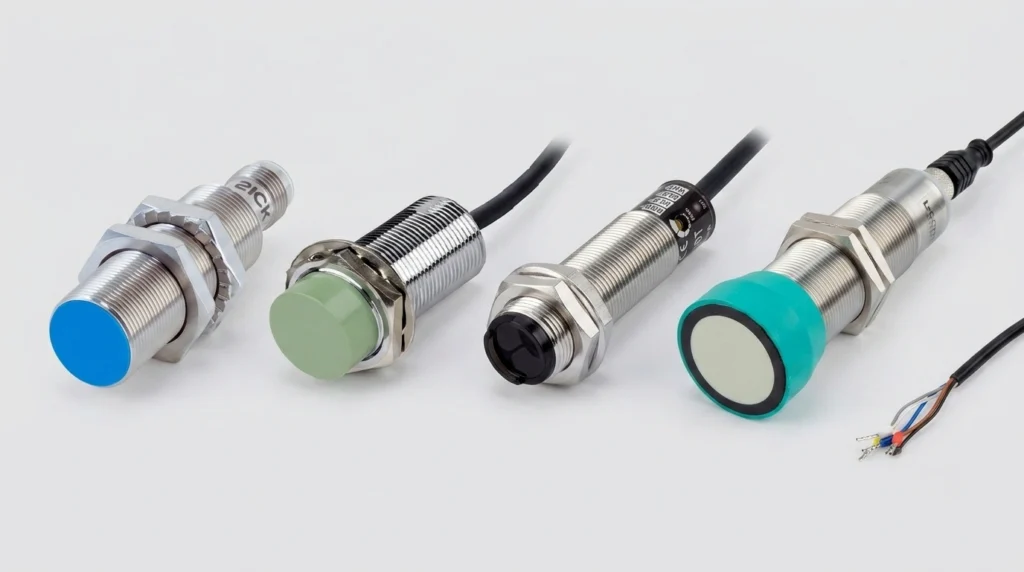
A practical industrial sensors guide covering proximity, photoelectric, ultrasonic, pressure and flow types, wiring, IP ratings, and top brands.
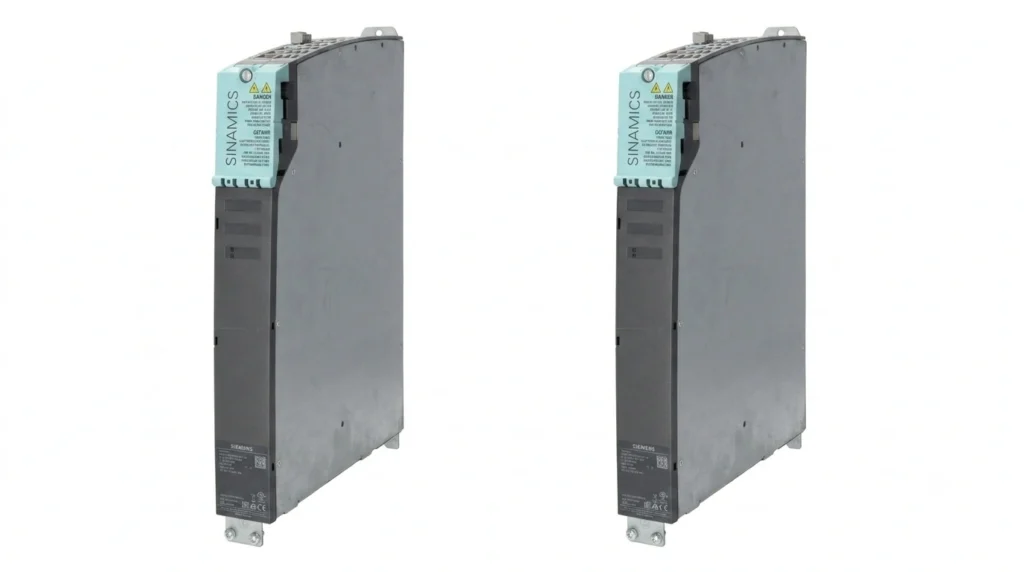
Navigate your Siemens VFD replacements. Decode SINAMICS S120 & G120 modules, configure software, and troubleshoot legacy MICROMASTER 440 fault codes.