

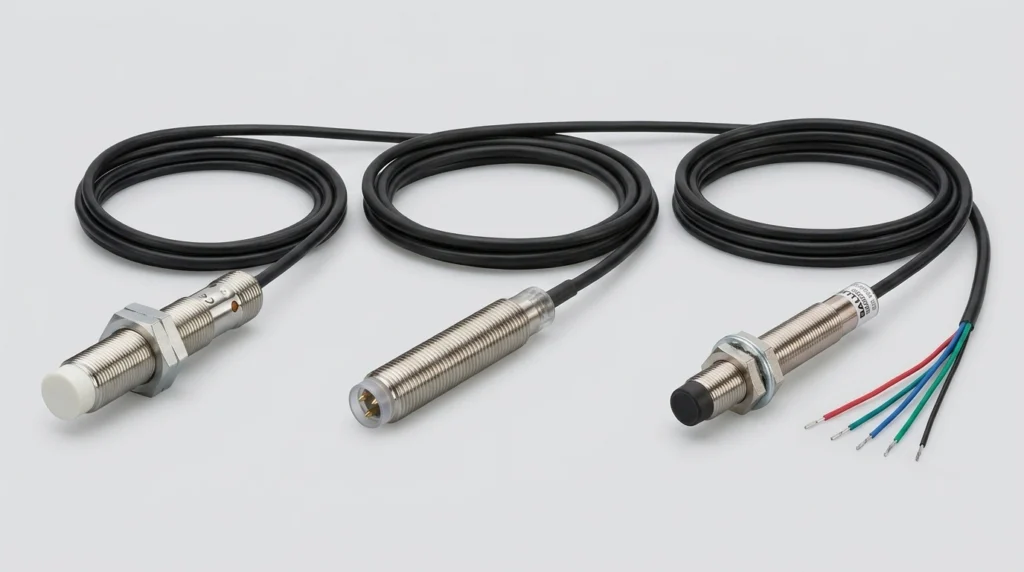
IFM Electronic Sensors: Product Guide for IFM204, BES013N, BES02F0 and IFM Sensor Cables
Master your setup with IFM sensors and cables. Decode the IFM204, clarify Balluff cross-references, check wiring steps, and configure IO-Link masters.
The Allen-Bradley Micro820 2080-LC20-20QWB is a compact, all-in-one PLC built for standalone machines, small conveyor systems, and remote monitoring applications – not a scaled-down version of a CompactLogix, but a purpose-built controller for OEM machine builders who need real Ethernet connectivity without paying for a platform that outgrows the job. The compact/integrated PLC segment is projected to grow at a CAGR of 12.3% through the forecast period, reflecting exactly the kind of demand this controller was designed to meet.
Where large system integrators reach for CompactLogix, small machine builders reach for the Micro820 – and for good reason.
Every character in the catalog number carries a specific technical meaning. Breaking it down:
The “W” in particular is worth paying attention to. Most comparable controllers in this price range are DC-only, which means a separate transformer or power supply in the panel. The 2080-LC20-20QWB takes 100–240 VAC directly at the terminals – fewer components, simpler wiring.
The Allen Bradley Micro820 fits on a standard 35mm DIN rail and draws a maximum of 5.62 W without plug-ins (up to 8.5 W with). That efficiency matters in smaller enclosures with limited thermal headroom.
Full onboard I/O at a glance:
The four analog inputs stand out. Many controllers in this class offer one or two – four means temperature sensors, pressure transducers, and a VFD speed reference can all connect without any additional hardware.
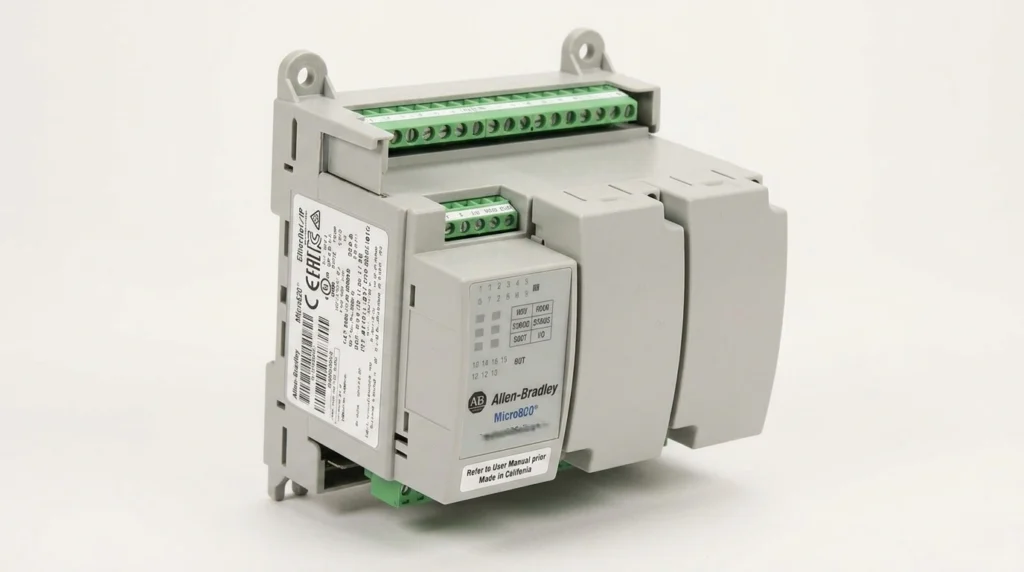
The Micro800 family has five tiers, and specifying the wrong one costs time or money. Here is how the four most common controllers compare:
| Feature | Micro810 | Micro820 | Micro830 | Micro850 |
| Max Onboard I/O | 12 | 20 | 48 | 48 |
| EtherNet/IP | No | Yes | No | Yes |
| Plug-in Slots | 0 | 2 | Up to 5 | Up to 5 |
| Expansion Modules | No | No | No | Yes (up to 4) |
| Serial Port | No | Yes | Yes | Yes |
| MicroSD Slot | No | Yes | No | No |
| Typical Use | Smart relay | Networked small machine | Standalone machine | Larger machine/motion |
The Micro810 is a smart relay – no Ethernet, no expansion, no serial. The Micro830 adds more I/O and plug-in capacity but most variants lack embedded Ethernet. The Micro850 handles larger machines requiring expansion I/O and motion outputs. The Micro820 occupies the middle ground where network connectivity matters but machine complexity does not justify a bigger platform.
Pro tip: If the application needs Ethernet and fits within 20–28 I/O points, the 2080-LC20-20QWB is almost always the right call.
Getting this controller operational from scratch is straightforward. PLCs account for an expected 51.3% value share of the industrial automation market by 2025, and part of that dominance comes from exactly this kind of accessibility – hardware that engineers can wire and commission in a single session.
Clip the controller onto a 35mm DIN rail – no tools needed. Connect 100–240 VAC to the L and N terminals. Note: the controller’s internal power supply handles this conversion, but field devices and sensors still require a separate 24V DC supply.
Leave clearance above and below for airflow. IP20 means the unit belongs inside an enclosure, not exposed to dust or splash.
For digital inputs, both NPN and PNP DC sensors work, as do AC sensing devices – just not mixed on the same common terminal. Relay outputs handle small contactors, solenoids, and indicator loads. Keep analog wiring short and shielded; the 0–10V DC channels are noise-sensitive.
Connected Components Workbench (CCW) is Rockwell’s free programming environment for the entire Micro800 family – no license fee, no dongle. Download the latest version from the Rockwell Automation website before starting; the compatibility matrix published with each release confirms firmware support for current 2080-LC20-20QWB units.
Connect via USB for the fastest first-time setup. CCW installs the driver automatically.
Steps to get the first program running:
The download takes seconds for typical programs. No separate configuration utility is needed.
The two plug-in slots open up the 2080-LC20-20QWB beyond its base configuration without adding a single millimeter to the DIN-rail footprint. Three modules appear in most real-world builds:
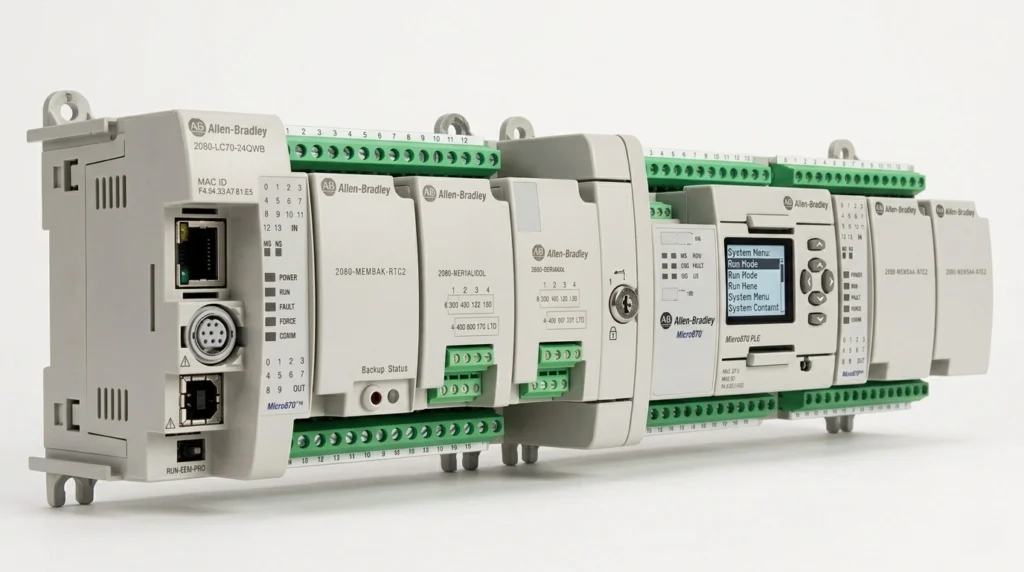
2080-SERIALISOL – isolated RS-232/RS-485 serial port. The isolation matters on long cable runs connecting to VFDs, barcode scanners, or Modbus RTU devices, where ground loops are a real risk.
2080-IQ4OB4 – 4-in/4-out digital plug-in that brings the total discrete I/O count to 28 points. Useful when the base 20 points fall just short.
2080-MEMBAK-RTC – memory backup combined with a real-time clock. The RTC enables time-stamped logs and scheduled operations; the memory module preserves the program through power interruptions without a battery. Important: the 2080-MEMBAK-RTC2 variant is not supported on Micro820 – verify the exact module before ordering.
The onboard MicroSD slot adds another layer. A standard card inserted into the slot enables direct data logging – production counts, fault histories, sensor records – without any SCADA infrastructure required.
PLCs dominate the industrial automation market with a 33% segment share, and compact controllers like the Micro820 drive a significant portion of that through exactly the kind of focused, single-machine applications listed below.
The 2080-LC20-20QWB appears consistently in four application types:
What connects these applications is a shared profile: self-contained machines that benefit from network visibility but don’t justify the complexity of a larger control platform.
Ready to source the 2080-LC20-20QWB? Zancot offers competitive pricing with reliable stock. View current pricing on Zancot and confirm availability before finalizing your BOM. For expansion modules, power supplies, and related Allen-Bradley components, the Zancot Micro800 catalog covers the full ecosystem in a single order.
Does the 2080-LC20-20QWB require a paid software license?
No. Connected Components Workbench is free to download and covers full programming, configuration, and troubleshooting for the Micro820.
Can the Micro820 be used without Ethernet?
Yes – the USB port handles programming and the serial port handles field device communication. Ethernet is onboard but optional.
What is the maximum I/O count with plug-ins installed?
With two 2080-IQ4OB4 plug-ins, the 2080-LC20-20QWB reaches 28 discrete I/O points plus the onboard analog channels.
Is the 2080-MEMBAK-RTC2 compatible with this controller?
No. Rockwell’s documentation explicitly excludes the RTC2 variant from Micro820 use. The standard 2080-MEMBAK-RTC is the supported option.
What power supply does the Micro820 need?
The 2080-LC20-20QWB accepts 100–240 VAC directly. Field devices and sensors require a separate 24V DC supply.
Master your setup with IFM sensors and cables. Decode the IFM204, clarify Balluff cross-references, check wiring steps, and configure IO-Link masters.
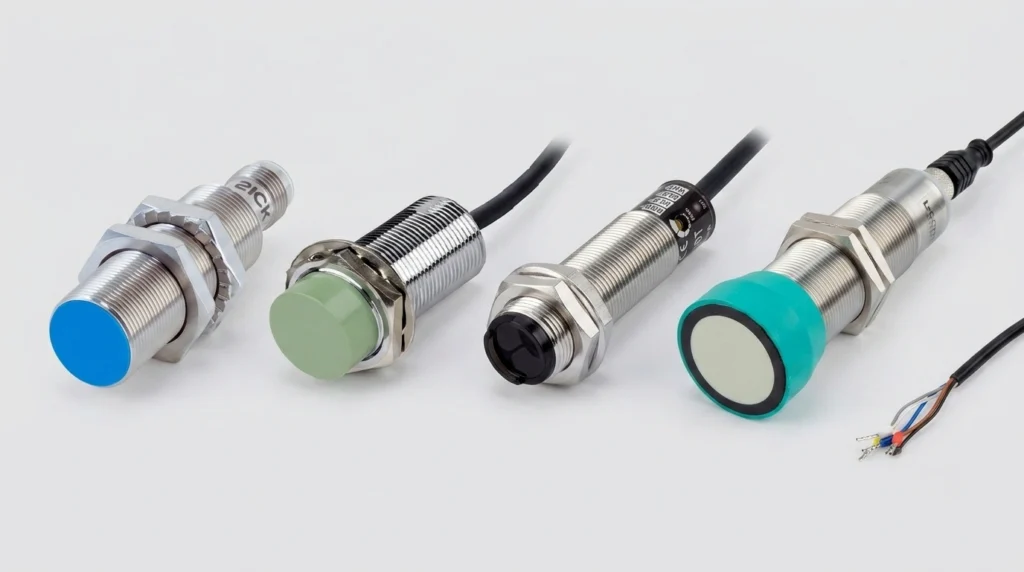
A practical industrial sensors guide covering proximity, photoelectric, ultrasonic, pressure and flow types, wiring, IP ratings, and top brands.
Navigate your Siemens VFD replacements. Decode SINAMICS S120 & G120 modules, configure software, and troubleshoot legacy MICROMASTER 440 fault codes.