

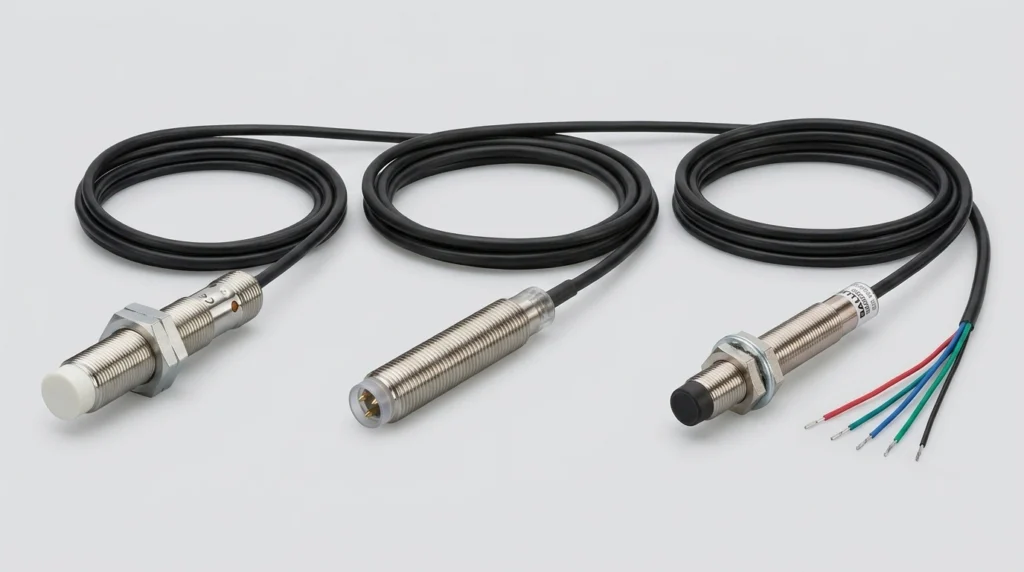
IFM Electronic Sensors: Product Guide for IFM204, BES013N, BES02F0 and IFM Sensor Cables
Master your setup with IFM sensors and cables. Decode the IFM204, clarify Balluff cross-references, check wiring steps, and configure IO-Link masters.
The Allen-Bradley 5069-L320ERM is a CompactLogix 5380 motion controller with 2 MB user memory, dual Gigabit Ethernet/IP ports, support for up to 16 local 5069 Compact I/O modules, and 8 integrated CIP motion axes. It belongs to the 5069 platform – a generation that is architecturally distinct from the older 1769 series and not a direct hardware swap.
That last point causes more spec-stage errors than almost anything else in CompactLogix selection. The 5069 chassis, I/O modules, and power supply are all different from their 1769 equivalents. Understanding this upfront saves significant rework later.
Every character in the catalog number communicates something specific:
The safety variant, 5069-L320ERMS, adds integrated safety memory for SIL 2/PLd applications on top of this standard feature set – same hardware footprint, same network ports, extended safety capability.
Note: The 5069 L320ERM is also commonly searched without the hyphen. Both refer to the same catalog number.
| Parameter | 5069-L320ERM |
| User Memory | 2 MB |
| Local I/O Modules | Up to 16 (5069 Compact I/O only) |
| Ethernet/IP Ports | 2 embedded, dual-port switch |
| Network Speed | 10/100/1000 Mbps full-duplex |
| Ethernet/IP Nodes | Up to 40 |
| CIP Motion Axes | 8 |
| Max Tasks | 32 (up to 1,000 programs/task) |
| Programming Port | USB Type-B 2.0 |
| Software | Studio 5000 Logix Designer v30+ |
| CIP Security | Supported (TLS encryption) |
| Mounting | DIN rail, horizontal only |
The 2 MB memory figure is roughly three times what the legacy 1769-L32E offered. That headroom matters for IIoT tag structures, advanced diagnostics, and motion profile data that tend to fill memory faster than engineers expect on older platforms.
The dual embedded ports are worth examining beyond the spec sheet. They support three network topologies – star, linear, and Device Level Ring (DLR) – without additional switching hardware in linear or ring configurations.
DLR is particularly relevant for packaging and conveyor applications. A single cable break in a DLR ring doesn’t take down the entire I/O network; the controller detects the fault and reconfigures routing in milliseconds. For lines where unplanned downtime is expensive, that fault tolerance has direct operational value.
The controller also supports Dual-IP mode, which allows the two ports to operate on separate logical subnets. This is useful when isolating a machine control network from a plant-level SCADA or MES network – without adding a separate managed switch.
Up to 40 Ethernet/IP nodes and 32 socket connections are supported simultaneously, covering most mid-size machine cells and leaving room for future device additions.
This is the specification detail that causes the most confusion during system design.
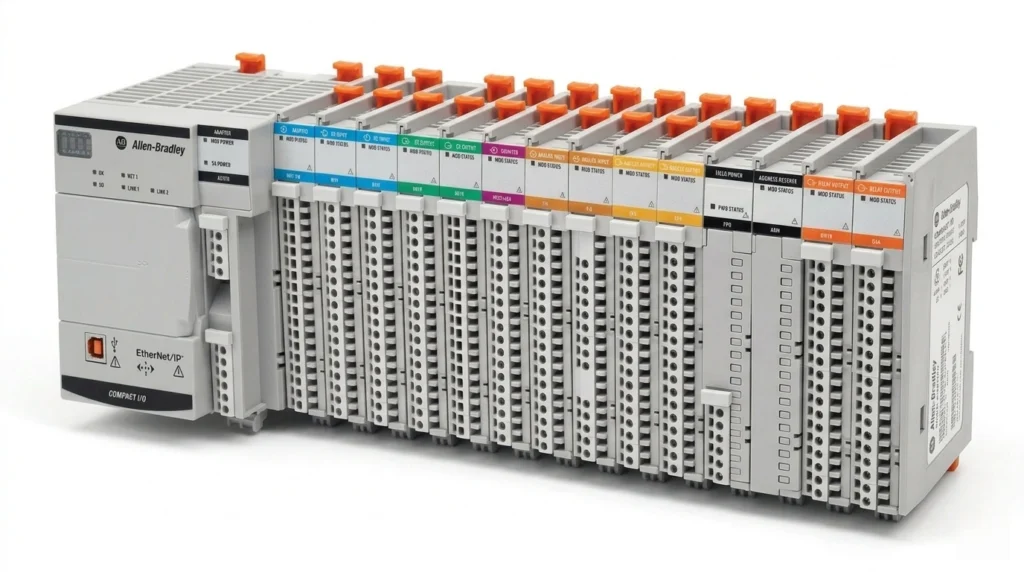
The 5069-L320ERM only accepts 5069-series Compact I/O modules. These are physically and electrically incompatible with 1769 Compact I/O modules – the backplane connector design changed between generations. Common 5069 I/O modules used with this controller include:
Up to 16 modules can be mounted locally. Beyond that, remote I/O connects over the Ethernet/IP network using standard adapter modules.
The 5069-L320ERM is the natural migration target for engineers moving off end-of-life 1769 controllers – but the path requires deliberate planning, not just a hardware swap.
Three things change that affect both budget and timeline:
Pro Tip: Rockwell confirmed in its Studio 5000 v34 release notes that v30–v33 projects could become unsavable when pulled from running PLCs under Windows 10. Running v34 or later eliminates that risk entirely.
The migration isn’t a rewrite. Programming languages – Ladder Diagram, Structured Text, Function Block, Sequential Function Chart – carry over directly. Tag database structure is largely preserved, which means most logic migration work involves remapping I/O addresses and updating module configurations rather than rebuilding control logic from scratch.
Ethernet/IP remains the network standard throughout. HMIs, variable frequency drives, and remote I/O adapters that operated on a 1769 network will continue to work on a 5069 network with the correct configuration. For a direct model comparison, the 1769-L36ERM product page on Zancot covers specification differences side by side.
The performance gains are measurable. Faster scan times, higher I/O throughput, and module-level diagnostics all improve visibility into machine behavior. The 5380 platform is also Rockwell’s actively supported architecture – the 1769 series reached end-of-life status, meaning spare parts and firmware support timelines are finite.
Older CompactLogix controllers had no native encryption capability. The 5069-L320ERM changes that with full CIP Security support, including TLS-encrypted communications between the controller and compatible network devices.
CIP Security enables device-level authentication and role-based access control – features that matter increasingly as industrial networks connect to plant-level IT infrastructure. For facilities working toward IEC 62443 compliance, this built-in capability removes the need for separate security appliances at the machine level.
The 5069-L320ERMS variant extends this with SIL 2/PLd integrated safety, making it applicable to robotic work cells and automated lines where cybersecurity and functional safety requirements overlap.
The DLR fault tolerance, fast I/O scan rates, and 8-axis motion support make this controller a practical fit for servo-indexed packaging equipment. A cable fault mid-run doesn’t halt production, and the motion capability covers most cam-replacement servo architectures without scaling to a larger controller.
For coordinated motion applications – gantries, pick-and-place machines, servo-indexed conveyors – the native CIP Motion support reduces component count compared to older architectures requiring separate motion controllers. Compatible servo drives connect directly over the standard Ethernet/IP network. Browse Ethernet/IP motion-compatible drives on Zancot for pairing options.
Work cells combining robot controllers, vision systems, and safety I/O benefit from the dual-port architecture and Dual-IP capability. Separate logical networks for control and safety traffic can be maintained without additional switching hardware in simpler topologies.
The 5069-L320ERM is available through Zancot, with both new and surplus units in inventory. Whether speccing a new installation or sourcing a replacement controller on short notice, check the product page for current stock levels and lead times – or contact the Zancot team directly for compatibility verification before ordering.
Can 1769 I/O modules be used with the 5069-L320ERM?
No. The 5069 backplane only accepts 5069 Compact I/O modules. To use legacy 1769 I/O with a 5069 controller, a 1769-AENTR Ethernet/IP adapter is required, which connects the 1769 rack over the network rather than the local backplane.
What version of Studio 5000 is required?
Studio 5000 Logix Designer v30 or later. RSLogix 5000 is not compatible with the 5380 platform.
How many motion axes does the 5069-L320ERM support?
8 CIP Motion axes over Ethernet/IP as standard. This covers most mid-size servo applications.
What is the difference between 5069-L320ERM and 5069-L320ERMS?
The 5069-L320ERMS adds integrated safety memory, supporting SIL 2/PLd safety functions. The standard 5069-L320ERM has no safety memory and is a non-safety controller.
Is the 5069-L320ERM in stock at Zancot?
Yes – check real-time availability on the 5069-L320ERM product page at Zancot.
Master your setup with IFM sensors and cables. Decode the IFM204, clarify Balluff cross-references, check wiring steps, and configure IO-Link masters.
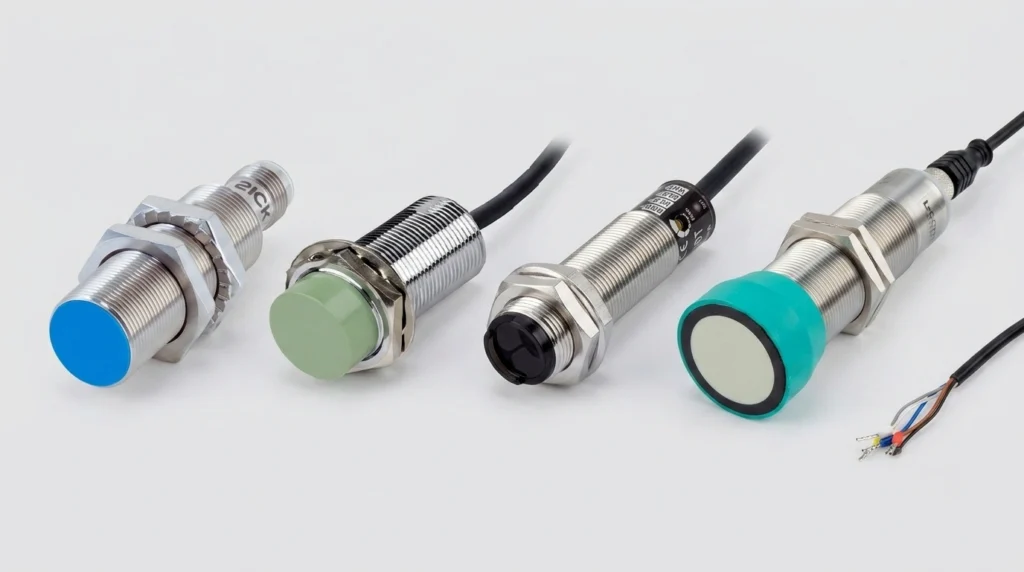
A practical industrial sensors guide covering proximity, photoelectric, ultrasonic, pressure and flow types, wiring, IP ratings, and top brands.
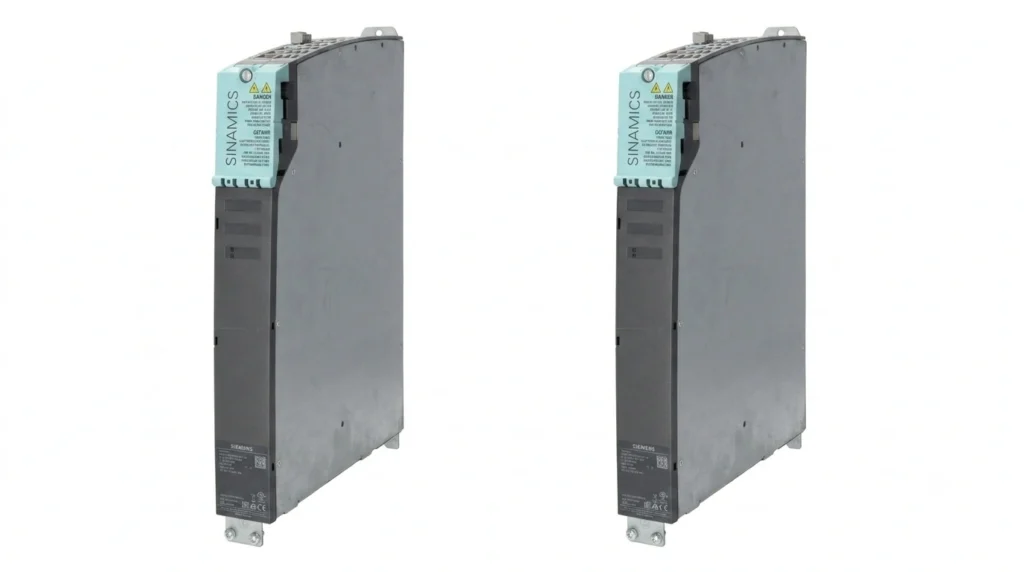
Navigate your Siemens VFD replacements. Decode SINAMICS S120 & G120 modules, configure software, and troubleshoot legacy MICROMASTER 440 fault codes.