

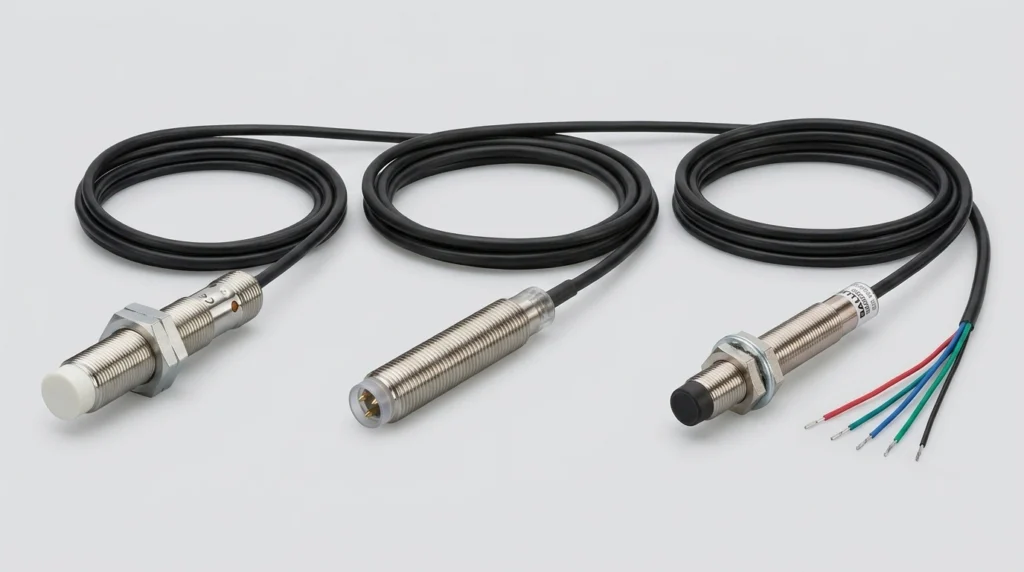
IFM Electronic Sensors: Product Guide for IFM204, BES013N, BES02F0 and IFM Sensor Cables
Master your setup with IFM sensors and cables. Decode the IFM204, clarify Balluff cross-references, check wiring steps, and configure IO-Link masters.
What is the IFM204, and how does it differ from the BES013N or BES02F0? The short answer: the IFM204 is a genuine IFM electronic inductive sensor built for mobile equipment applications, while BES013N and BES02F0 are actually Balluff parts that frequently show up in the same searches. Knowing the difference before ordering saves plants from installing the wrong sensor on a machine that’s already down.
This guide breaks down all four parts, explains how to wire and mount them correctly, and shows where IFM cables fit into the picture.
Unplanned downtime is not a minor line item anymore. According to Aberdeen Research, the average cost of unplanned downtime across manufacturing sectors now sits around $260,000 per hour, and automotive plants can lose well over $2 million per hour when a line stops cold. A failed proximity sensor rarely makes headlines, but it’s often the root cause behind these numbers – a $30 part holding up a $500,000-per-hour line.
That’s the practical reason sourcing teams care about getting the right IFM sensors the first time, rather than guessing at cross-references under pressure.
Ordering the wrong sensor doesn’t just delay a repair. It usually means:
Pro tip: Keep a cross-reference sheet on hand for critical machines listing the exact IFM204, BES013N, or BES02F0 equivalents already validated for that station. It turns an emergency search into a five-minute lookup.
The IFM204 is a cylindrical inductive proximity sensor housed in an M12x1 threaded body. It’s rated for a 7 mm sensing range and built for non-flush mounting, which gives it more reach than flush-mount sensors of the same diameter. Gold-plated contacts and an increased sensing range profile make it a common choice for mobile machinery – forklifts, agricultural equipment, and construction vehicles that see constant vibration and contamination.
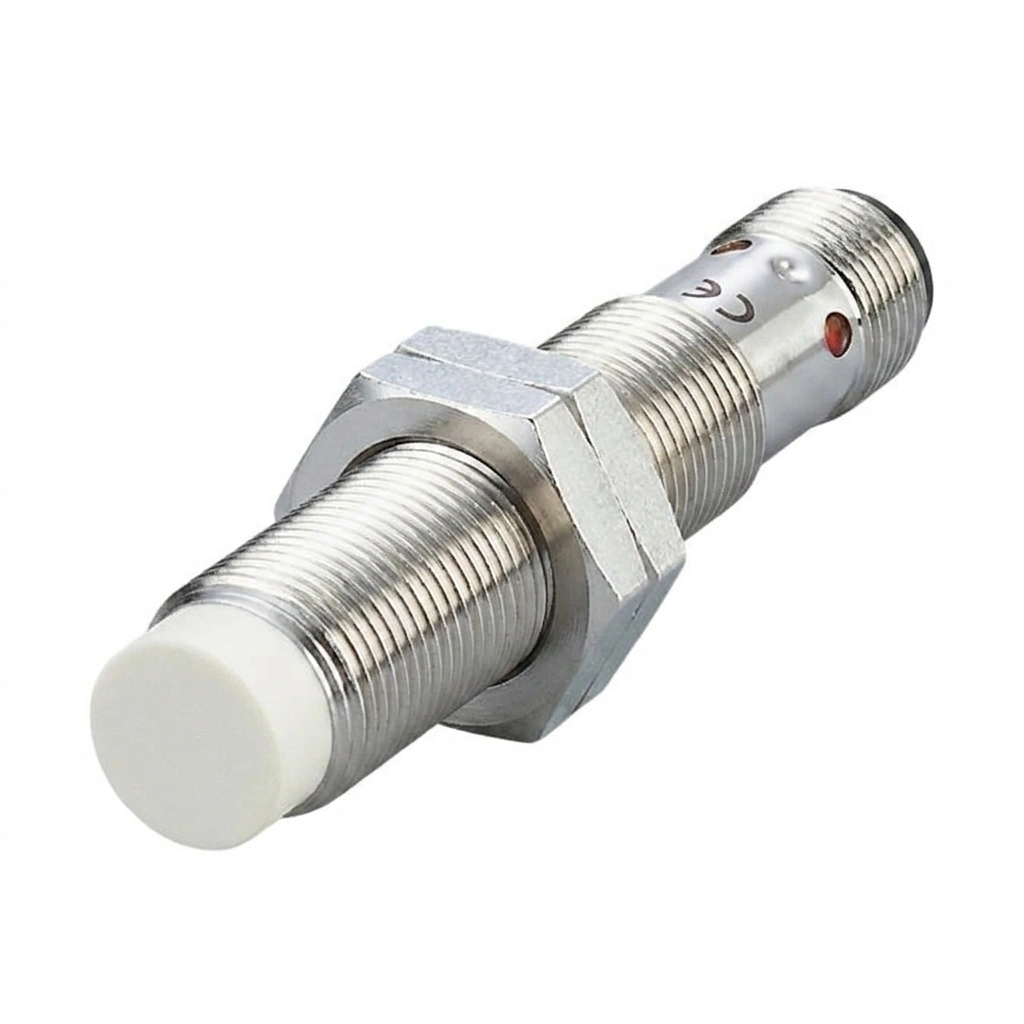
The IFM204 supports selectable PNP or NPN output in a normally open configuration, running on 10 to 36V DC. It connects through a standard M12 quick-disconnect. Because the output type is selectable rather than fixed, double-checking the datasheet before wiring saves a troubleshooting headache that’s more common than it should be.
Yes, significantly. As a non-flush sensor, the IFM204 needs clearance around its sensing face. Mount it flush against metal and the effective sensing range drops sharply – sometimes enough to stop detecting altogether. If a “new” sensor seems dead on arrival, mounting clearance is worth checking before assuming the part itself is faulty.
Searches for “IFM BES013N” are common, but here’s the direct answer: BES013N is not an IFM part. The BES prefix belongs to Balluff, a separate German manufacturer that competes in the same inductive sensor category. It’s an easy mix-up given how often the two brands’ catalogs sit side by side in cross-reference tables.
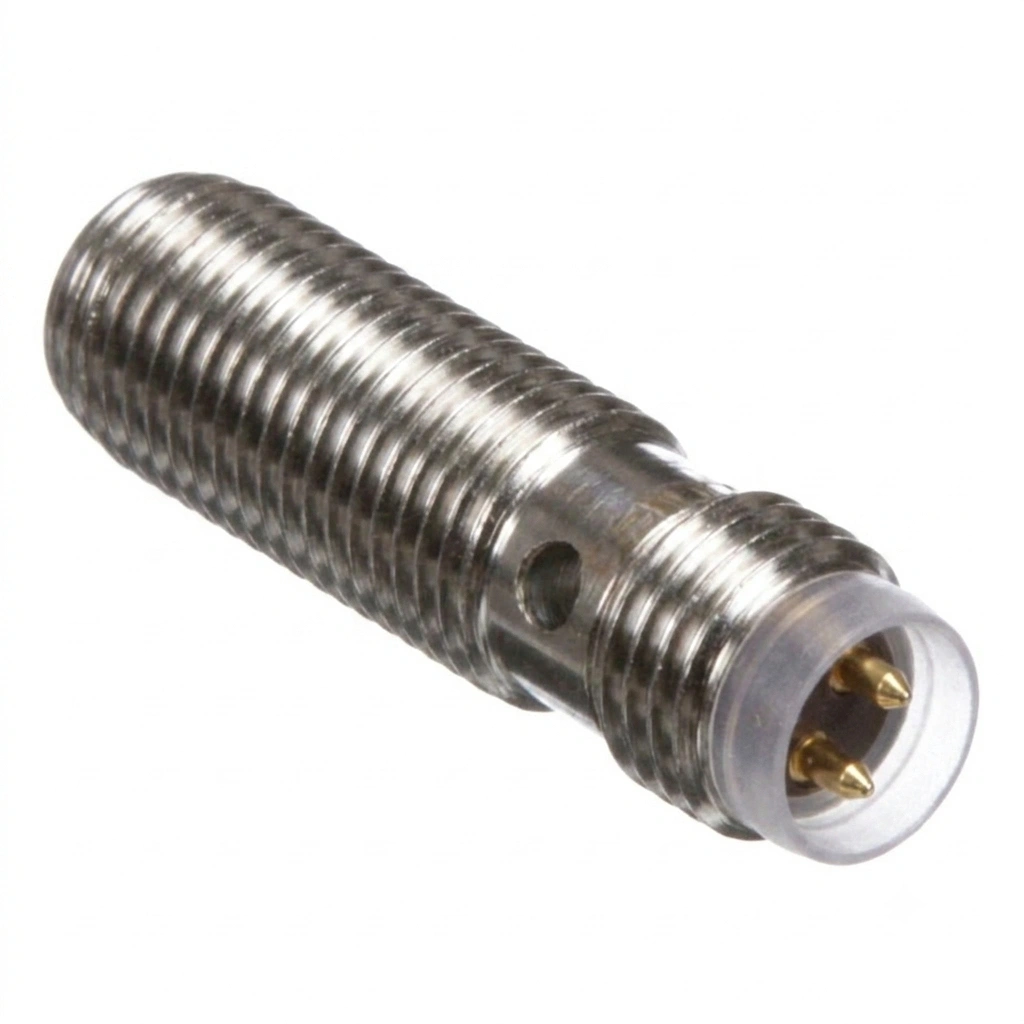
The BES013N itself is a compact M8 inductive sensor built for flush mounting, with a 1.5 mm sensing range, PNP normally open output, 10–30V DC operation, and a stainless steel housing rated to a 3000 Hz switching frequency. Its short range and small footprint make it well-suited for tight spots – small-parts detection on packaging lines or end-of-travel sensing on compact actuators.
Being upfront about brand origin matters here. A supplier that quietly ships a Balluff part when a customer requested IFM electronic sensors damages trust fast, especially in a B2B relationship built on repeat orders.
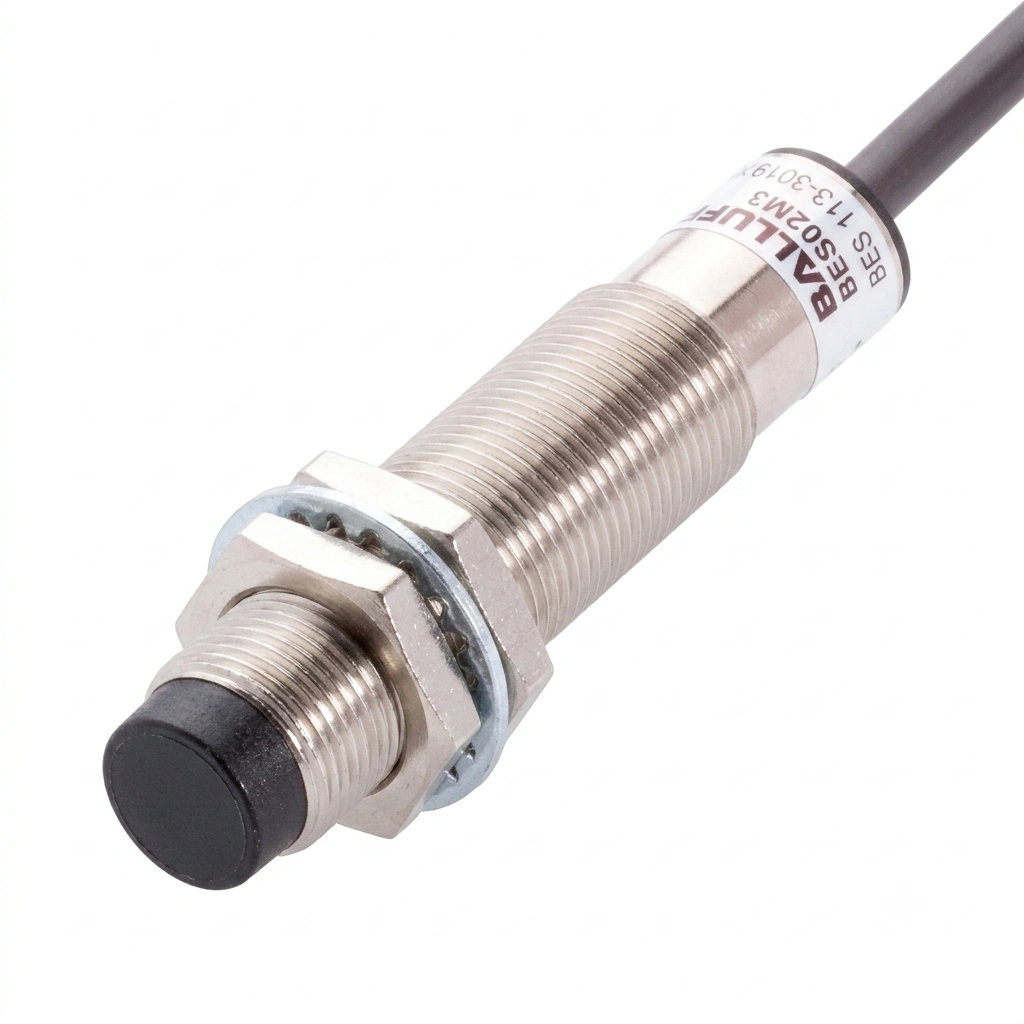
Same situation. The BES02F0 is a Balluff inductive sensor, built in an M30x1.5 housing rated for flush mounting with a 10 mm sensing range and a PNP normally open output. It’s a larger-format part, better suited to applications where mounting space isn’t as tight but a longer detection distance is needed – heavier machine guarding or cylinder end-position sensing.
| Feature | IFM204 | BES013N | BES02F0 |
| Manufacturer | IFM electronic | Balluff | Balluff |
| Housing | M12x1 | M8x1 | M30x1.5 |
| Sensing range | 7 mm | 1.5 mm | 10 mm |
| Mounting | Non-flush | Flush | Flush |
| Output | PNP/NPN, NO | PNP, NO | PNP, NO |
| Voltage | 10–36V DC | 10–30V DC | 10–30V DC |
IFM product codes aren’t arbitrary. A typical catalog number encodes the product series, electrical design (PNP, NPN, or analog), output function, and connection type in sequence. The system isn’t perfectly uniform across every product family – IFM’s catalog has grown over decades – but recognizing a few key digits often reveals a sensor’s basic specs before anyone opens a datasheet.
For procurement teams managing long parts lists across multiple lines, that shortcut matters. It’s one more way to catch an incorrect substitution before it ends up mounted on a machine.
A sensor is only as reliable as the cable feeding it. IFM cables are built to the same durability standard as the sensors themselves, and two models come up constantly in order.
EVC001 is a straight M12 female cordset, 4-pole, 2 meters, with a PUR jacket resistant to oils and coolants – the default choice for most machine tool and assembly environments. EVC547 is a shielded female cordset with gold-plated contacts, typically specified where electrical noise is a concern, such as near variable frequency drives or welding equipment.
Many current-generation IFM sensors support IO-Link, a digital protocol that replaces a simple on/off signal with detailed diagnostic data. IO-Link sensors connect through a master rather than directly into a PLC’s discrete inputs. The AL1350 offers 4 IO-Link ports with an IoT interface supporting MQTT JSON, useful for streaming sensor data to cloud or edge systems. The AL1352 steps up to 8 ports with a higher IP69K rating, a better fit for washdown environments like food and beverage processing.
Setting up either master usually involves assigning ports to IO-Link or standard I/O mode, then pulling device parameters through configuration software – a workflow that turns sensor replacement from guesswork into a documented, repeatable process.
When an exact IFM part isn’t available, or when a plant is consolidating suppliers, matching sensing range, housing diameter, output type, and connector style across brands usually gets close to an equivalent part. Switching frequency and temperature ratings can still vary enough to matter in demanding applications, so checking the full datasheet rather than relying on sensing range alone is worth the extra few minutes.
Whether the parts list calls for a straightforward IFM204, a correctly identified Balluff cross-reference, or a full set of IFM cables to rebuild a sensor network, working with a supplier who confirms brand and compatibility before shipping prevents costly mistakes. Zancot stocks IFM sensors, IFM cables, and related automation components alongside Siemens, Allen Bradley, ABB, and Schneider Electric parts.
Is the BES013N made by IFM?
No. BES013N is a Balluff part number. It’s frequently searched alongside IFM sensors because both brands compete in the same inductive sensor category.
Can the IFM204 be flush mounted?
No. It’s rated for non-flush mounting only. Flush installation will noticeably reduce or eliminate its effective sensing range.
What’s the difference between EVC001 and EVC547?
EVC001 is a straight, unshielded PUR cable suited to general-purpose sensor connections. EVC547 adds shielding and gold-plated contacts for environments with higher electrical noise.
Do all IFM sensors support IO-Link?
No. IO-Link support depends on the specific model. Standard switching sensors like the IFM204 use conventional PNP/NPN wiring, while IO-Link-enabled sensors require a compatible master such as the AL1350 or AL1352.
Master your setup with IFM sensors and cables. Decode the IFM204, clarify Balluff cross-references, check wiring steps, and configure IO-Link masters.
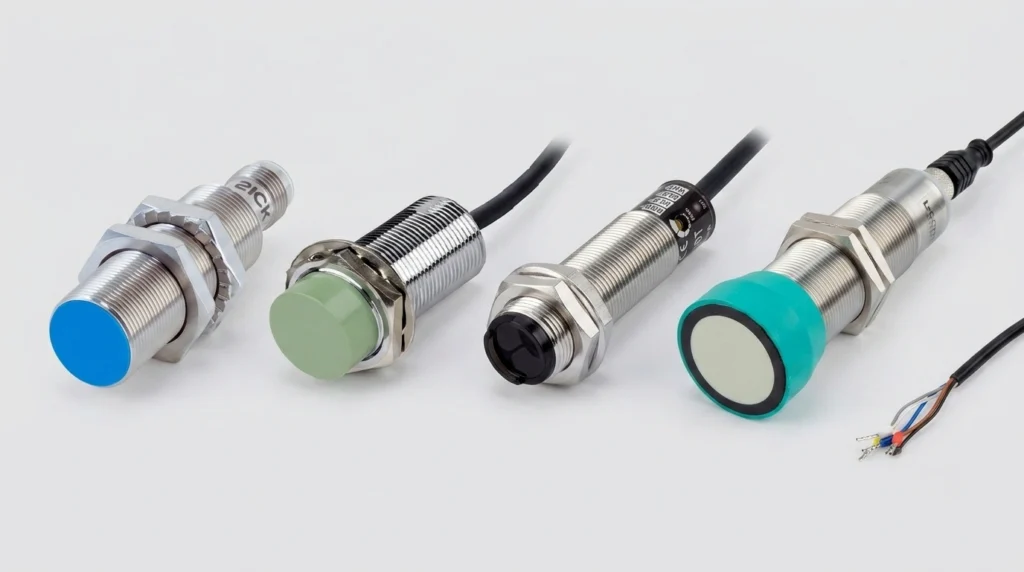
A practical industrial sensors guide covering proximity, photoelectric, ultrasonic, pressure and flow types, wiring, IP ratings, and top brands.
Navigate your Siemens VFD replacements. Decode SINAMICS S120 & G120 modules, configure software, and troubleshoot legacy MICROMASTER 440 fault codes.