

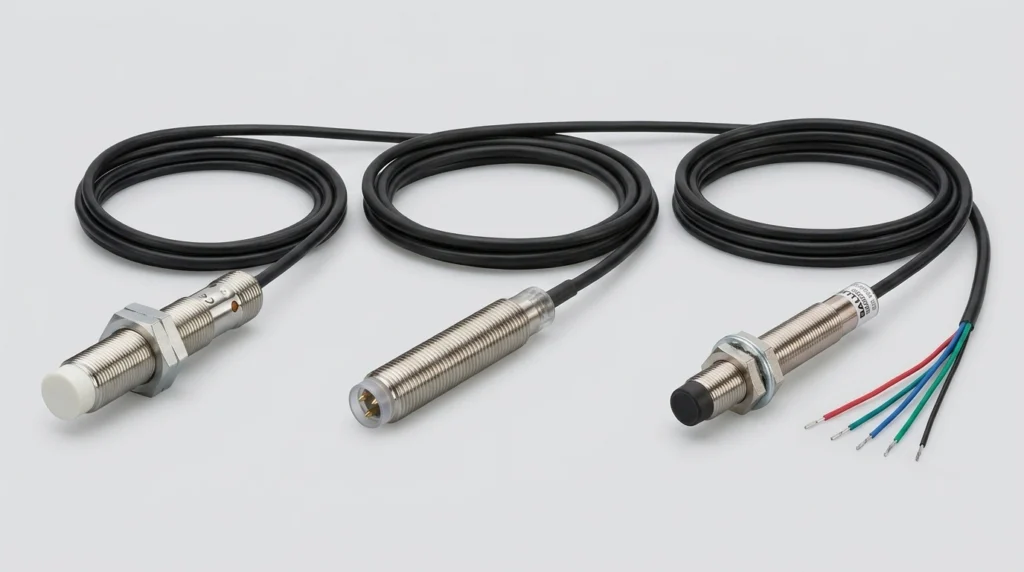
IFM Electronic Sensors: Product Guide for IFM204, BES013N, BES02F0 and IFM Sensor Cables
Master your setup with IFM sensors and cables. Decode the IFM204, clarify Balluff cross-references, check wiring steps, and configure IO-Link masters.
A programmable logic controller – PLC – is a ruggedized industrial computer that monitors inputs, runs a control program, and drives outputs in a continuous, deterministic loop. That’s the short answer. The longer one is that industrial PLC controllers are the reason modern manufacturing lines run at all – handling everything from simple conveyor sequencing to coordinated multi-axis motion across an entire plant floor.
The global PLC market reached USD 9.5 billion in 2025, driven by federal investment in advanced manufacturing and the accelerating push toward Industry 4.0 across discrete industries. For US manufacturers in automotive, food and beverage, oil and gas, and water treatment, that growth reflects a real operational need – not a trend.
Three types of controllers get compared regularly, and the distinctions matter when specifying hardware for a new project or sourcing a replacement.
A PLC (Programmable Logic Controller) executes a fixed control program in real time, with deterministic scan cycles measured in milliseconds. Designed for harsh environments, they tolerate vibration, temperature extremes, and electrical noise that would compromise general-purpose hardware.
A PAC (Programmable Automation Controller) adds processing power, broader protocol support, and tighter software integration. Rockwell’s ControlLogix platform sits here – technically a PLC family by naming convention, but PAC-level in capability.
An industrial PC runs a general-purpose OS and requires additional hardening for plant-floor use. Useful for data-heavy supervisory applications, but typically not the right choice for direct machine control.
Before PLCs, factories relied on hardwired relay logic panels. Changing machine behavior meant physically rewiring the panel – a process that could take days and required specialist electricians. Reprogramming an industrial PLC takes hours, sometimes minutes, without touching a single wire. That shift from hardware-defined to software-defined logic is what made PLCs the default control standard across North American manufacturing.
The physical architecture of a PLC shapes what it can do, how it scales, and what it costs to maintain. Most industrial PLC controllers fall into one of three categories.
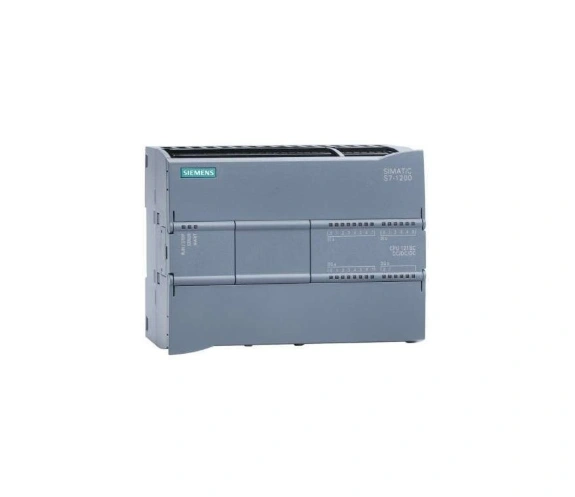
Compact PLCs house the CPU, power supply, and fixed I/O in one enclosure. They’re cost-effective for small OEM machines, standalone conveyors, or any application where the I/O count is defined upfront and unlikely to expand. The Siemens S7-1200 and Allen Bradley Micro820 are typical examples – capable, space-efficient, and easy to program.
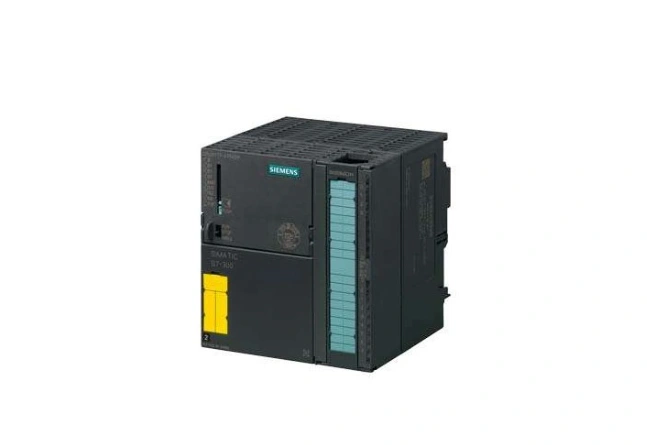
Modular PLCs use a base chassis with expandable I/O cards. This architecture suits mid-size production lines where requirements evolve over time. The Allen Bradley CompactLogix and Siemens S7-300 follow this pattern, allowing engineers to add I/O modules without replacing the controller.
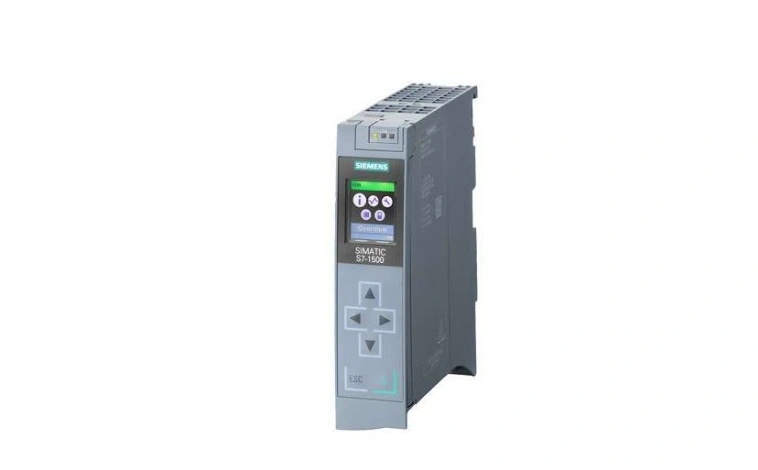
Rack-based PLCs – like the ControlLogix or Siemens S7-1500 – are built for plant-wide systems demanding high I/O counts, redundancy, and multi-axis motion control. They represent a larger upfront investment, but the processing headroom and fault tolerance are difficult to match at the compact level.
Datasheets can run dozens of pages. In practice, a handful of parameters drive most purchase decisions for industrial automation PLC systems:
Pro Tip: Getting I/O count wrong at the specification stage is expensive. Always build in 20–25% spare I/O capacity for future expansion – a standard practice in US systems integration.
Allen Bradley PLC hardware is the dominant platform in US manufacturing, particularly in automotive assembly, food processing, and consumer goods. Rockwell Automation’s three core families cover most applications:
| Family | Form Factor | Best For |
| Micro800 | Compact | Small machines, standalone equipment |
| CompactLogix | Modular | Mid-size lines, packaging, conveyors |
| ControlLogix | Rack-based | Plant-wide systems, multi-axis motion |
All three programs through Studio 5000 Logix Designer – Rockwell’s unified software environment. EtherNet/IP is the native protocol, and integration with FactoryTalk makes production data visibility relatively straightforward.
Understanding Rockwell’s part number structure saves time when sourcing replacements. Take 1769-L30ER as an example:
Knowing this structure lets maintenance engineers cross-reference a failed unit quickly without decoding an entire datasheet from scratch. Zancot’s Allen Bradley PLC catalog is organized by family, making part identification faster when downtime is already on the clock.
Siemens PLC hardware is the most widely deployed platform outside North America, and it’s common in US plants running European-designed machinery. The S7 family covers the full performance range.
The lineup breaks down clearly by scale:
Programming runs through TIA Portal (Totally Integrated Automation Portal), which handles PLC configuration, HMI development, and network design in one environment. PROFINET is the backbone protocol, with PROFIBUS available for legacy field devices.
Siemens part numbers follow a structured format. 6ES7 214-1AG40-0XB0 breaks down as:
For plants running Siemens-equipped lines, Siemens S7 replacement parts are stocked at Zancot across the S7-300, S7-1200, and S7-1500 families.
Three other platforms hold significant market share in US industrial facilities – particularly in plants running Asian OEM equipment or process-heavy applications.
Mitsubishi PLC hardware sells under the MELSEC brand. The FX series covers compact applications and is common in machinery imported from Japan and South Korea. The iQ-R series targets high-performance modular applications including multi-axis motion. Programming uses GX Works3, and CC-Link IE is the preferred high-speed network. Mitsubishi recently unveiled a dual-core processor PLC for automotive assembly lines that reduced operation lag by 14% while enabling simultaneous control of up to six robots.
Omron PLC hardware is well-established in packaging, pharmaceutical, and food and beverage. The CP series is compact; the CJ series handles modular mid-range needs; the NX series targets high-performance machine automation with nanosecond-level synchronization for motion control. Omron programs through Sysmac Studio, supporting all five IEC 61131-3 languages.
Schneider Electric’s Modicon platform is the oldest PLC brand still in production – the original Modicon 084, introduced in 1968, is credited as the first commercially sold PLC. Today’s lineup runs from the entry-level M221 through the mid-range M340 to the M580 for plant-wide Ethernet-native applications. Modbus TCP, a protocol Schneider helped develop, remains one of the most universally supported standards across all brands.
IEC 61131-3 defines five standard PLC programming languages. In practice, three dominate across US manufacturing:
| Language | Style | Common Use |
| Ladder Logic (LD) | Graphical, relay-based | General machine control; readable by most electricians |
| Function Block Diagram (FBD) | Block-based | Process industries, PID loops |
| Structured Text (ST) | High-level, Pascal-like | Complex math, data handling, advanced algorithms |
Structured Text has grown significantly in adoption for advanced process control – including Model Predictive Control strategies that would be difficult to implement cleanly in ladder logic.
Not every industrial PLC selection decision is complicated. Most applications map cleanly to a platform category based on scale and complexity.
| Application | Recommended Platform | Brand Examples |
| Small OEM machine | Compact PLC | AB Micro800, Siemens S7-1200, Omron CP, Modicon M221 |
| Mid-size production line | Modular PLC | AB CompactLogix, Siemens S7-300/1500, Omron CJ, Modicon M340 |
| Plant-wide / multi-axis | Rack-based PLC | AB ControlLogix, Siemens S7-1500, Mitsubishi iQ-R |
| Legacy system replacement | Match existing platform | Cross-reference part number before ordering |
That last row matters more than it might seem. Swapping platforms mid-lifecycle – replacing a failed Siemens S7-300 CPU with a different brand – means reprogramming everything from scratch. When production is stopped, a direct replacement is almost always faster and cheaper than a platform migration.
Note: Always verify firmware compatibility when sourcing replacement CPUs for modular platforms. A newer hardware revision may require a software update to the existing program before the system runs correctly.
One analysis found that implementing predictive maintenance systems around PLC-controlled equipment yielded a 20% reduction in downtime and a 15% increase in productivity – results that depend entirely on having compatible, functioning hardware available when a fault occurs.
For US automotive and oil and gas facilities, unplanned downtime costs thousands of dollars per hour. Having the right industrial PLC controllers available from a supplier who stocks genuine parts across multiple brands – and ships quickly – isn’t a preference. It’s an operational necessity.
Zancot stocks Allen Bradley, Siemens, ABB, and Schneider Electric industrial PLC controllers alongside compatible I/O modules, power supplies, and communication hardware. Whether the need is an urgent replacement or a planned platform upgrade, the full PLC controllers catalog at Zancot covers all major families.
What is the most common PLC brand used in US manufacturing?
Allen Bradley (Rockwell Automation) holds the largest installed base in North American discrete manufacturing, particularly in automotive, food and beverage, and consumer goods. Siemens is the most common on European-designed equipment running in US plants.
What is the difference between a compact and modular PLC?
Compact PLCs have a fixed I/O count built into the main unit – cost-effective for defined applications. Modular PLCs use a chassis-based architecture where I/O cards are added as needed, making them better suited for applications that may expand over time.
What communication protocols do industrial PLCs support?
The most common are EtherNet/IP (Allen Bradley), PROFINET (Siemens), Modbus TCP (cross-brand), and DeviceNet (legacy Rockwell installations). Most modern PLC industrial control systems support at least two of these natively.
How long do industrial PLCs last?
Well-maintained PLCs in stable environments can run for 15–20 years. End-of-life designation by the manufacturer – not physical failure – is often what forces replacement. Sourcing spare units before a platform reaches EOL is standard practice in US facilities.
Can different PLC brands communicate with each other?
Yes, through open protocols like Modbus TCP and OPC-UA, mixed-brand environments are manageable. EtherNet/IP also supports cross-brand communication through appropriate configuration. However, tight integration – such as coordinated motion – typically works best within a single vendor’s ecosystem.
Master your setup with IFM sensors and cables. Decode the IFM204, clarify Balluff cross-references, check wiring steps, and configure IO-Link masters.
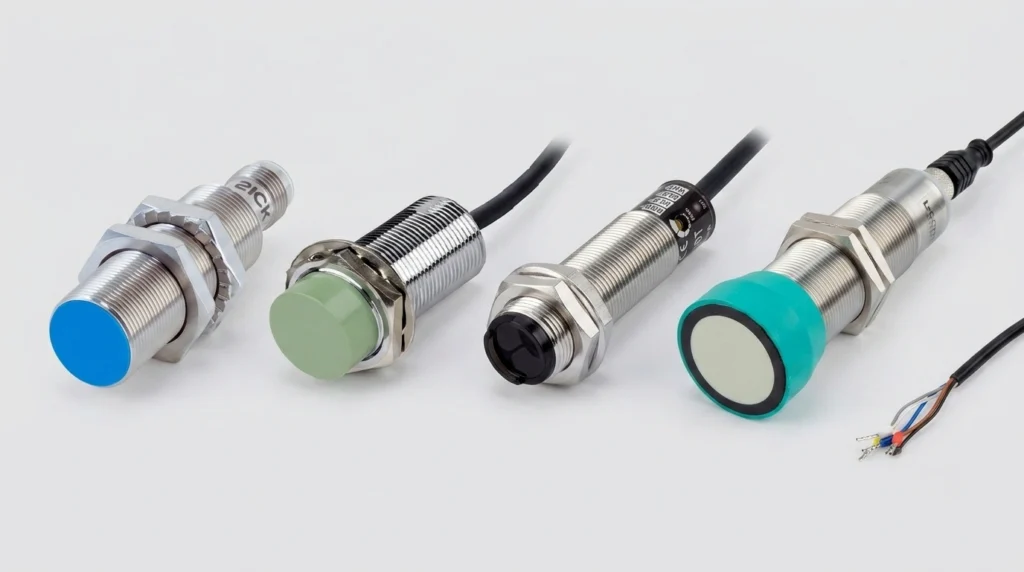
A practical industrial sensors guide covering proximity, photoelectric, ultrasonic, pressure and flow types, wiring, IP ratings, and top brands.
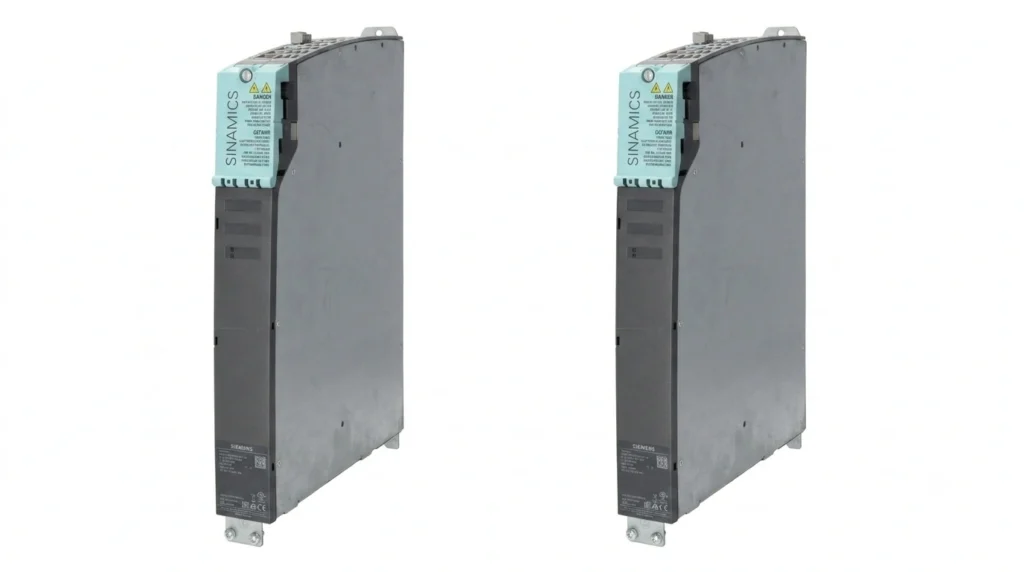
Navigate your Siemens VFD replacements. Decode SINAMICS S120 & G120 modules, configure software, and troubleshoot legacy MICROMASTER 440 fault codes.