

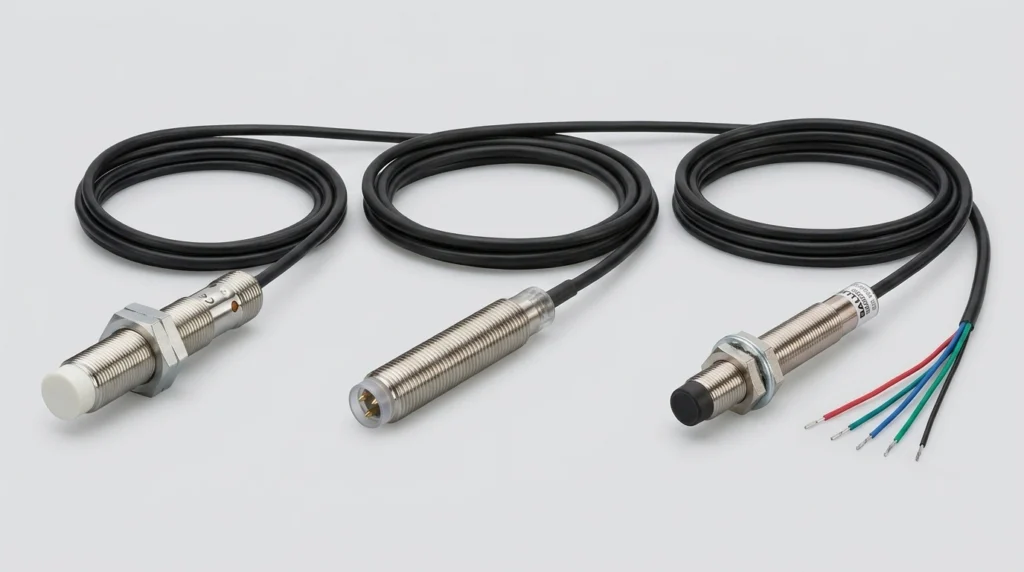
IFM Electronic Sensors: Product Guide for IFM204, BES013N, BES02F0 and IFM Sensor Cables
Master your setup with IFM sensors and cables. Decode the IFM204, clarify Balluff cross-references, check wiring steps, and configure IO-Link masters.
Choosing between an Altivar ATV320 and an Altivar ATV71 comes down to one question: is this drive going into a new compact machine, or is it replacing a process-grade unit that’s already installed? The ATV320 is Schneider’s current compact platform for OEM equipment. The ATV71 is an older process drive still active in the field but no longer recommended for new designs. Both matter to maintenance teams and machine builders working with Schneider Electric VFD equipment right now.
Demand for this kind of motor control isn’t shrinking. According to 2026 Fortune Business Insights market data, the global variable frequency drive market was valued at roughly $23.85 billion in 2025 and is projected to climb to $40.97 billion by 2034. That growth is part of why sourcing the right part number – not just “a drive that’s close enough” – has become a bigger priority for industrial buyers.
The short answer: application scope and vintage. The ATV320 is a compact, general-purpose Schneider Electric VFD built for OEM machinery – conveyors, mixers, small hoists, pump skids. The ATV71 was designed for heavier process work: cranes, hoisting equipment, pumps fighting back-pressure, applications where torque precision at low speed actually matters.
The ATV71 hasn’t been discontinued. It sits in active commercialization, meaning parts and support are still available, but Schneider steers new projects toward the ATV320 or its process-grade successor instead.
Model numbers on these drives aren’t random strings – they encode power rating and voltage class. Take ATV320U75M3C as an example:
Misreading that “U75” as something smaller than it actually is remains one of the more common ordering mistakes buyers make when comparing part numbers across distributors.
This unit is a 7.5 kW / 10 HP drive running on 200–240V three-phase power, housed in an IP20 chassis meant for panel mounting. It’s a fairly typical fit for small-to-mid conveyor lines and mixing equipment where cabinet space is limited.
Key specifications at a glance:
| Feature | ATV320U75M3C |
| Power rating | 7.5 kW / 10 HP |
| Supply voltage | 200–240V, 3-phase |
| Enclosure | IP20, compact |
| Communication | Modbus (standard), CANopen, optional EtherNet/IP |
| Overload capacity | ~170–200% transient |
| Safety | Safe Torque Off (STO) |
Commissioning is done through Schneider’s SoMove software, connected via USB or the drive’s built-in communication port. Setup starts with motor nameplate data – voltage, current, frequency, power – followed by selecting a control macro suited to the machine’s function.
Pro tip: SoMove allows saving a full parameter file. For a like-for-like replacement, that turns a re-commissioning job into a file upload instead of a manual re-entry of every ramp and threshold value.
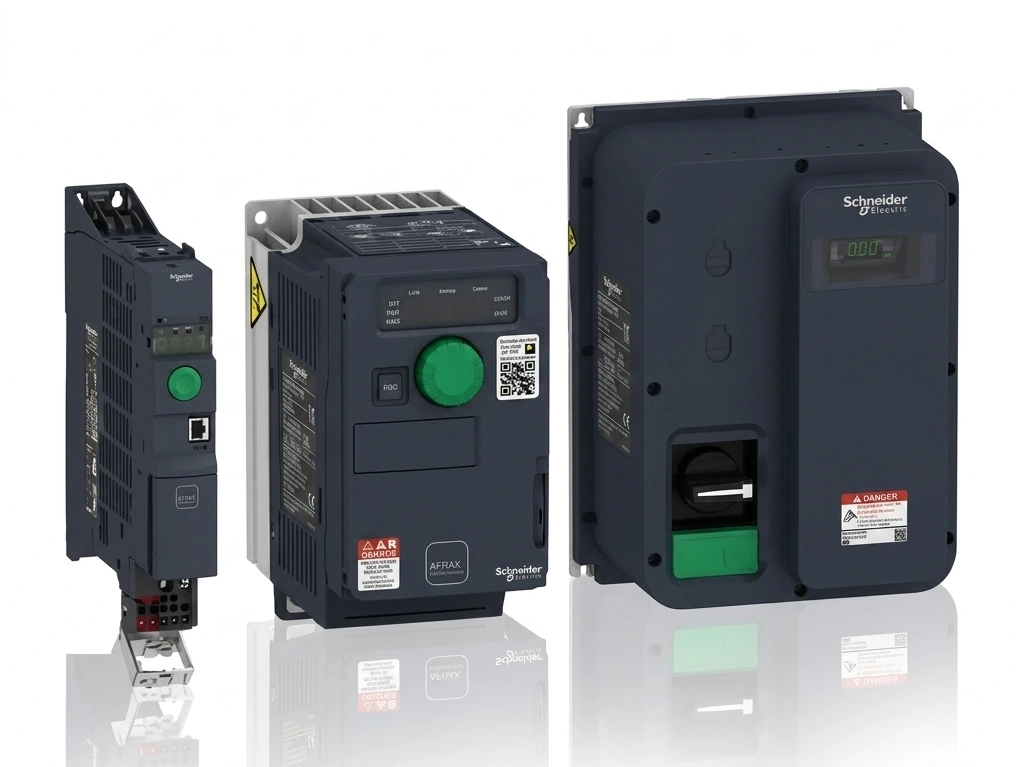
Both are 380–480V three-phase process drives, but they cover different power classes. The ATV71HD11N4Z is rated at 11 kW / 15 HP, built with an integrated EMC filter. The ATV71HU75N4Z sits a step down at 7.5 kW / 10 HP, same voltage class.
Both units support embedded Modbus and CANopen, with an optional fieldbus card slot for plants running Profibus or DeviceNet. Flux vector control is the feature that separates these from lighter-duty drives – it holds torque steady at low speeds, which matters when a hoist is lifting a load or a pump is working against resistance.
Three codes cover most service calls on this platform:
Because it’s an older platform with its own parameter architecture. Instead of the ATV320’s setup flow, the ATV71 organizes configuration around a small set of core codes: bFr for base frequency, ACC and dEC for acceleration and deceleration ramps, and ItH for motor thermal protection. Getting ItH wrong isn’t a minor detail – set it too high and a motor can overheat before the drive intervenes; set it too low and a correctly sized motor trips needlessly.
Neither drive dissipates regenerative energy on its own. When a motor decelerates fast, or a hoist lowers a load, that energy needs somewhere to go – that’s the resistor’s job.
Sizing depends on duty cycle more than horsepower alone:
The ATV630 is Schneider’s current replacement for process-grade ATV71 applications, but it isn’t a drop-in swap. Parameters – base frequency, ramp times, thermal thresholds – need to be re-entered manually, since the ATV630 uses a different internal structure. Terminal wiring and control terminal numbering also differ, including how Safe Torque Off is wired. Treating this as a full re-commissioning task avoids surprises after the plant restarts the line.
Zancot stocks Schneider Electric VFD models across both the ATV320 and ATV71 lines – including the ATV320U75M3C, ATV71HD11N4Z, and ATV71HU75N4Z – along with matched braking resistors and accessories. Check current stock or send a part number for a quick availability confirmation before a production line sits idle waiting on a replacement drive.
Is the ATV71 discontinued?
No. It remains in active commercialization with parts and support available, but Schneider no longer recommends it for new machine designs.
Does “U75” always mean 0.75 kW?
No – for both the ATV320U75M3C and ATV71HU75N4Z, U75 corresponds to 7.5 kW once the decimal is shifted. The prefix pattern is consistent across the power range, not a fixed multiplier.
Can an ATV71 parameter file be loaded onto an ATV630?
Not directly. The two platforms use different menu structures, so parameters have to be re-entered rather than copied over.
What voltage does the ATV320U75M3C run on?
200–240V three-phase, compact IP20 chassis.
Master your setup with IFM sensors and cables. Decode the IFM204, clarify Balluff cross-references, check wiring steps, and configure IO-Link masters.
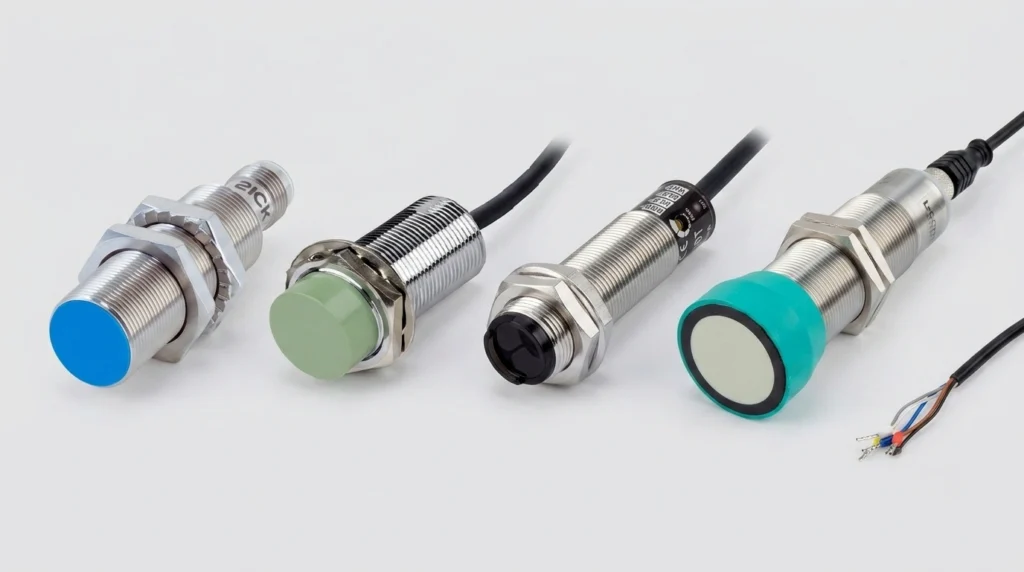
A practical industrial sensors guide covering proximity, photoelectric, ultrasonic, pressure and flow types, wiring, IP ratings, and top brands.
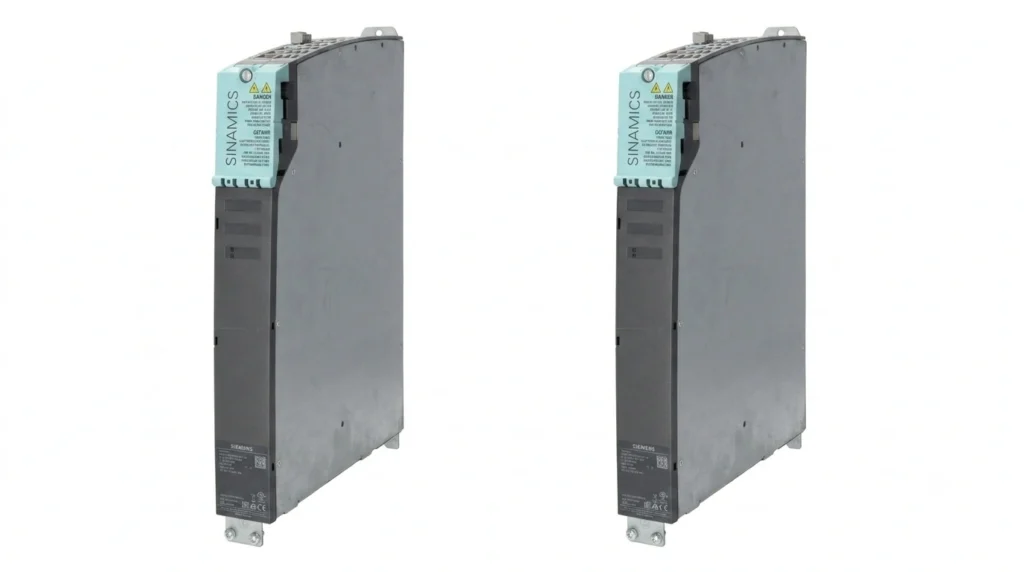
Navigate your Siemens VFD replacements. Decode SINAMICS S120 & G120 modules, configure software, and troubleshoot legacy MICROMASTER 440 fault codes.