

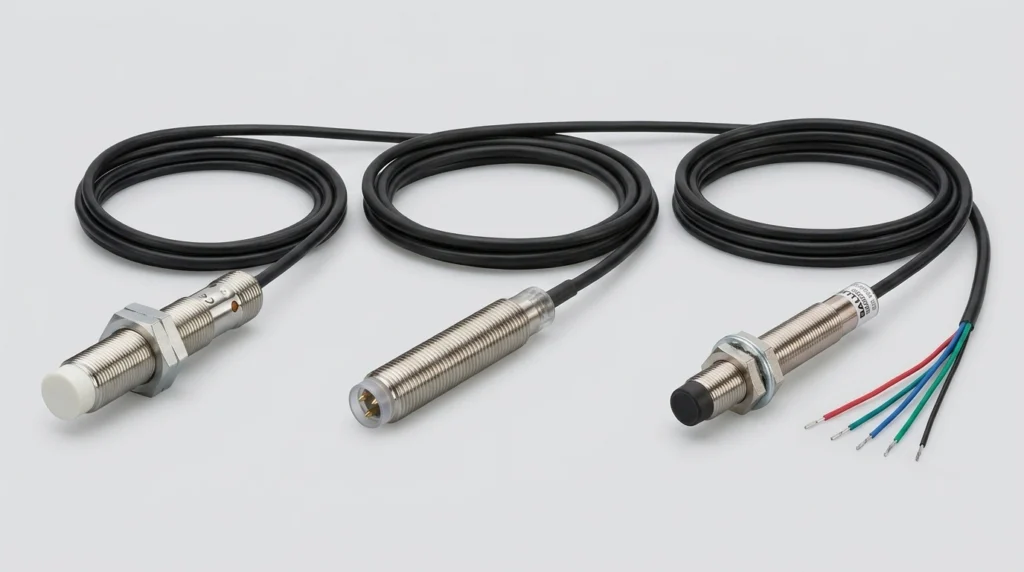
IFM Electronic Sensors: Product Guide for IFM204, BES013N, BES02F0 and IFM Sensor Cables
Master your setup with IFM sensors and cables. Decode the IFM204, clarify Balluff cross-references, check wiring steps, and configure IO-Link masters.
Allen-Bradley PowerFlex 40, PowerFlex 4M, and PowerFlex 525 drives are compact variable frequency drives (VFDs) built to control motor speed on conveyors, pumps, fans, and compressors – and picking the right one comes down to matching four things: horsepower, input voltage, output current, and enclosure type, all encoded directly in the catalog number. For a maintenance team staring at a failed drive on a Friday afternoon, that catalog number is the fastest route back to production.
This guide breaks down what separates these model families, how to decode a nameplate, and where sourcing usually goes wrong.
Demand for this class of drive isn’t slowing down. The global VFD market was valued at roughly $23.85 billion in 2025 and is projected to climb to $25.54 billion in 2026, with North America alone accounting for close to $7.5 billion of that figure. AC drives – the category these Allen-Bradley models belong to – make up the large majority of that spend, driven by their broad compatibility with standard induction motors.
None of that growth changes what happens on the plant floor when a drive trips offline. What it does mean is more replacement units in circulation, more catalog-number variants to sort through, and more room for costly ordering mistakes.
Before ordering anything, it helps to know which drive family a given part actually belongs to. That’s where most sourcing errors start.
The prefix is the fastest identifier available. 22B marks a PowerFlex 40, 22F marks a PowerFlex 4M, and 25B marks a PowerFlex 525 – a related but distinct family with its own parameter structure and factory-installed EtherNet/IP.
| Prefix | Drive Series | Typical Role | Communication |
| 22B | PowerFlex 40 | General-purpose, 0.5–15 HP (480V class) | RS-485, optional EtherNet/IP card |
| 22F | PowerFlex 4M | Lower-cost, simple single-machine tasks | RS-485 |
| 25B | PowerFlex 525 | Higher-spec, integrated safety, networked plants | Built-in EtherNet/IP |
A quick note worth flagging: teams sometimes assume any Allen-Bradley drive numbered in the “20-something” range belongs to the same product line. It doesn’t. Ordering a 25B part expecting PowerFlex 40 behavior – or vice versa – is one of the more common (and avoidable) purchasing mistakes.
Once the prefix is sorted, the remaining characters follow a repeatable logic:
Pro tip: when a nameplate is damaged or partially unreadable, matching even a few surviving digits against a supplier’s catalog search is often enough to confirm the exact replacement – no need to guess based on horsepower alone.
Specs matter more than model families in isolation, so here’s how four commonly requested numbers actually compare.
| Catalog Number | Series | Power | Input | Output Current | Enclosure |
| 22B-D6P0N104 | PowerFlex 40 | 3 HP (2.2 kW) | 480V, 3-phase | 6.0 A | IP20 Open |
| 22F-D4P2N103 | PowerFlex 4M | 2 HP (1.5 kW) | 480V, 3-phase | 4.2 A | IP20 Open |
| 25B-D1P4N114 | PowerFlex 525 | 0.5 HP (0.4 kW) | 480V, 3-phase | 1.4 A | IP20, Frame A |
| 25B-D037N114 | PowerFlex 525 | 25 HP normal duty | 480V, 3-phase | 37.0 A | IP20, Frame D/E |
That range – from a 1.4 A unit meant for a small auxiliary pump up to a 37 A drive handling real horsepower – reflects how differently these parts get deployed even within a single facility.
Most sourcing headaches trace back to one of a few recurring issues.
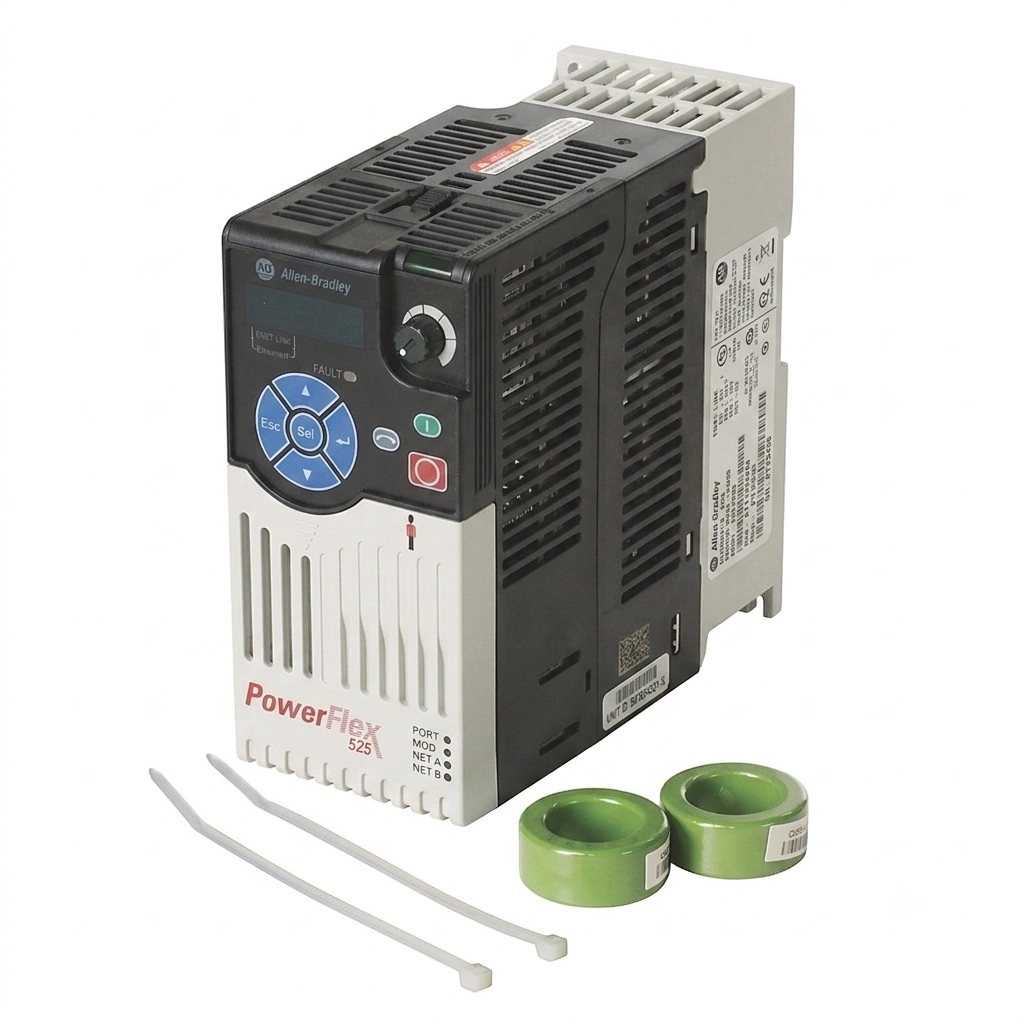
Two drives can share the same horsepower rating and still not be interchangeable. Filtering, enclosure rating, and frame size differ across otherwise similar-looking part numbers, and a mismatch means either a return shipment or, worse, a drive that faults on startup because its overload settings don’t match the connected motor.
Common failure points include:
Startup accuracy prevents a large share of early-life nuisance faults. On PowerFlex 40 and 4M units, the core parameters are Motor NP Volts, Motor NP Hertz, and Motor OL Current – all entered directly from the motor nameplate. The PowerFlex 525 asks for a longer list, adding Motor NP FLA, Poles, RPM, and Power, followed by an optional autotune cycle to fine-tune performance.
Skipping this step, or entering current values that don’t match the actual connected motor, is a leading cause of overload trips within the first weeks of operation.
A short list of fault codes accounts for most service calls on this drive class:
None of these should be cleared by simply cycling power without investigating the root cause first.
Facilities running mixed Siemens, ABB, Schneider, and Allen-Bradley fleets often gravitate toward standardizing spares within a single VFD family for a practical reason: it shrinks the number of SKUs a maintenance team needs to track, and it means technicians only need to learn one parameter structure well. Industry data backs this preference – AC drives account for well over half of global VFD market value, and low-voltage drives dominate unit shipments precisely because they cover the bulk of everyday pump, fan, and conveyor applications.
For a distributor stocking Allen-Bradley, Siemens, ABB, and Schneider Electric parts side by side, this is where sourcing support earns its value: confirming the exact replacement catalog number, checking filtered versus unfiltered variants, and flagging compatible accessories before an order ships – not after.
What’s the difference between a PowerFlex 40 and a PowerFlex 525?
The PowerFlex 40 (22B prefix) is a general-purpose drive without built-in networking as standard, while the PowerFlex 525 (25B prefix) ships with embedded EtherNet/IP and Safe Torque-Off as standard features, making it the better fit for networked or safety-rated installations.
Can a filtered and unfiltered version of the same drive be swapped?
Not without consequences. A filtered (N114) unit includes an integral EMC filter that an unfiltered (N103/N104) version lacks, which matters in installations with strict electromagnetic compatibility requirements.
How is output current represented in the catalog number?
As digits with a “P” standing in for the decimal point – for example, 6P0 reads as 6.0 amps, and 4P2 reads as 4.2 amps.
What’s the fastest way to identify a drive with a damaged nameplate?
Match any surviving digits – even a partial current rating or enclosure code – against a supplier’s catalog search, since the pattern is consistent enough to narrow results quickly.
Master your setup with IFM sensors and cables. Decode the IFM204, clarify Balluff cross-references, check wiring steps, and configure IO-Link masters.
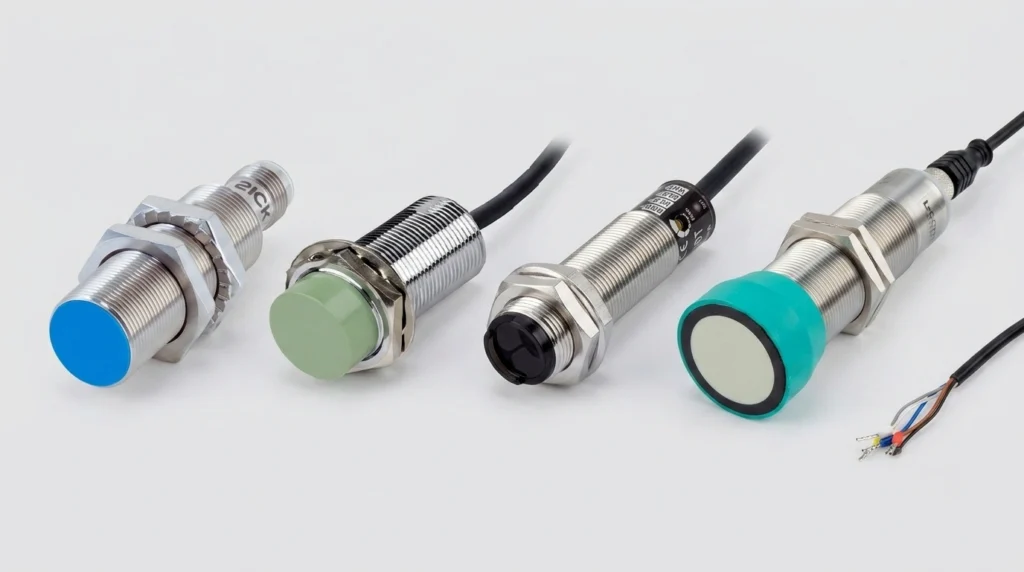
A practical industrial sensors guide covering proximity, photoelectric, ultrasonic, pressure and flow types, wiring, IP ratings, and top brands.
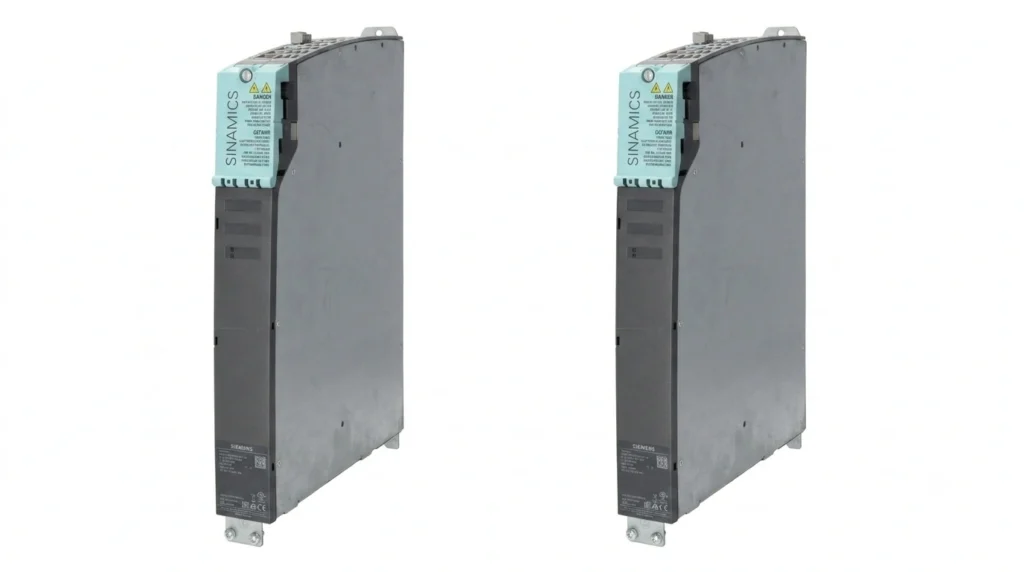
Navigate your Siemens VFD replacements. Decode SINAMICS S120 & G120 modules, configure software, and troubleshoot legacy MICROMASTER 440 fault codes.