

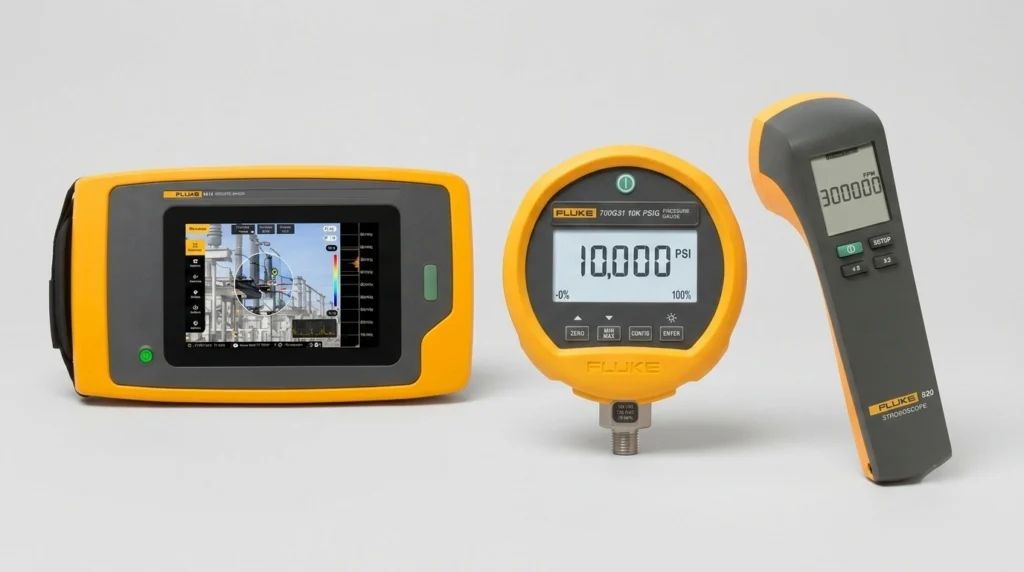
Fluke ii915, 700G31 & 820-2: Industrial Test Tools Compared
Compare the Fluke ii915 acoustic imager, 700G31 pressure calibrator, and 820-2 stroboscope. Learn specs, safety, and how to choose the right industrial tool.
Which Fluke test tool actually fits a maintenance job – an acoustic imager, a pressure calibrator, or a stroboscope? The short answer: it depends on what’s failing. Compressed air leaks call for the Fluke ii915, pressure transmitter drift calls for the Fluke 700G31, and rotating equipment inspection calls for the Fluke 820-2. According to a compressed air fact sheet developed with the U.S. Department of Energy, leaks can waste 20 to 30 percent of a compressor’s output – a loss most plants never actually see, only pay for.
That single statistic explains why acoustic imaging tools like the ii915 have moved from “nice to have” to standard equipment in a lot of maintenance departments. But a compressed air leak and a worn pump coupling are two different problems, and no single instrument solves both. This comparison breaks down what each of these three Fluke tools does, where it earns its cost back, and how to know which one belongs to a specific job.
The Fluke ii915 is an acoustic imaging camera. It doesn’t measure heat – it measures sound, specifically the ultrasonic frequencies produced by compressed air leaks, vacuum leaks, and partial electrical discharge (also called corona).
A 64-microphone array inside the Fluke ii915 picks up sound sources that sit well outside normal human hearing range, then overlays that data onto a live image so the leak location becomes visually obvious. That matters because most leaks in a busy plant are impossible to hear over background noise, even standing right next to them.
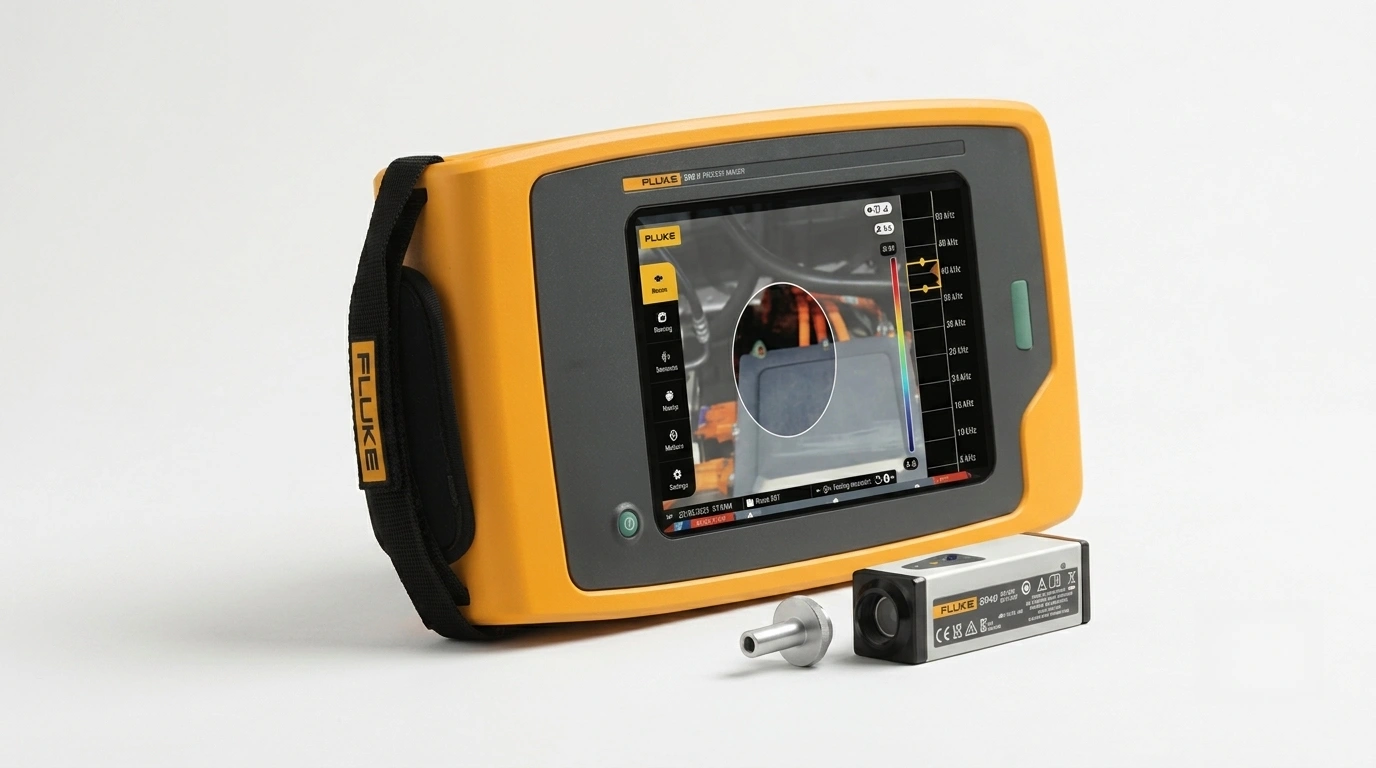
Instead of walking a compressed air line with a handheld ultrasonic pen and listening point by point, a technician can scan an entire header or manifold from several meters away and get a visual map of every leak at once. For a plant running dozens of pneumatic lines, that difference alone can cut a leak audit from a full day down to a couple of hours.
Key specifications of the Fluke ii915:
Fluke also makes a lower-tier model, the ii910, and the two get confused constantly. The ii910 covers general leak detection well in smaller facilities. The Fluke ii915 adds extended range and broader frequency coverage, which matters most in large plants, tall ceilings, or high-voltage switchgear inspections where standing close isn’t an option.
A rough rule of thumb: if the work is mostly walking a small compressed air loop, the ii910 is enough. If the job includes scanning electrical cabinets for corona from a safe distance, or covering long production runs, the ii915’s extra range justifies the price gap.
Here’s a detail that gets glossed over in product listings: it is not CAT-rated as an electrical measurement instrument. It’s a diagnostic imaging tool, not a voltage tester, and it shouldn’t replace a properly rated meter for direct contact work. What it is good for is standoff inspection – spotting early corona activity from a distance before anyone needs to open a panel at all, which is arguably safer than most alternatives.
Pressure transmitters drift. Slowly, and often without any obvious symptom until a process reading is already wrong. The Fluke 700G31 exists to catch that drift before it becomes a production or safety issue.
It’s a handheld calibrator covering 0–3,000 PSI at 0.05% accuracy, built for validating pressure transmitters and switches in the field rather than in a lab.
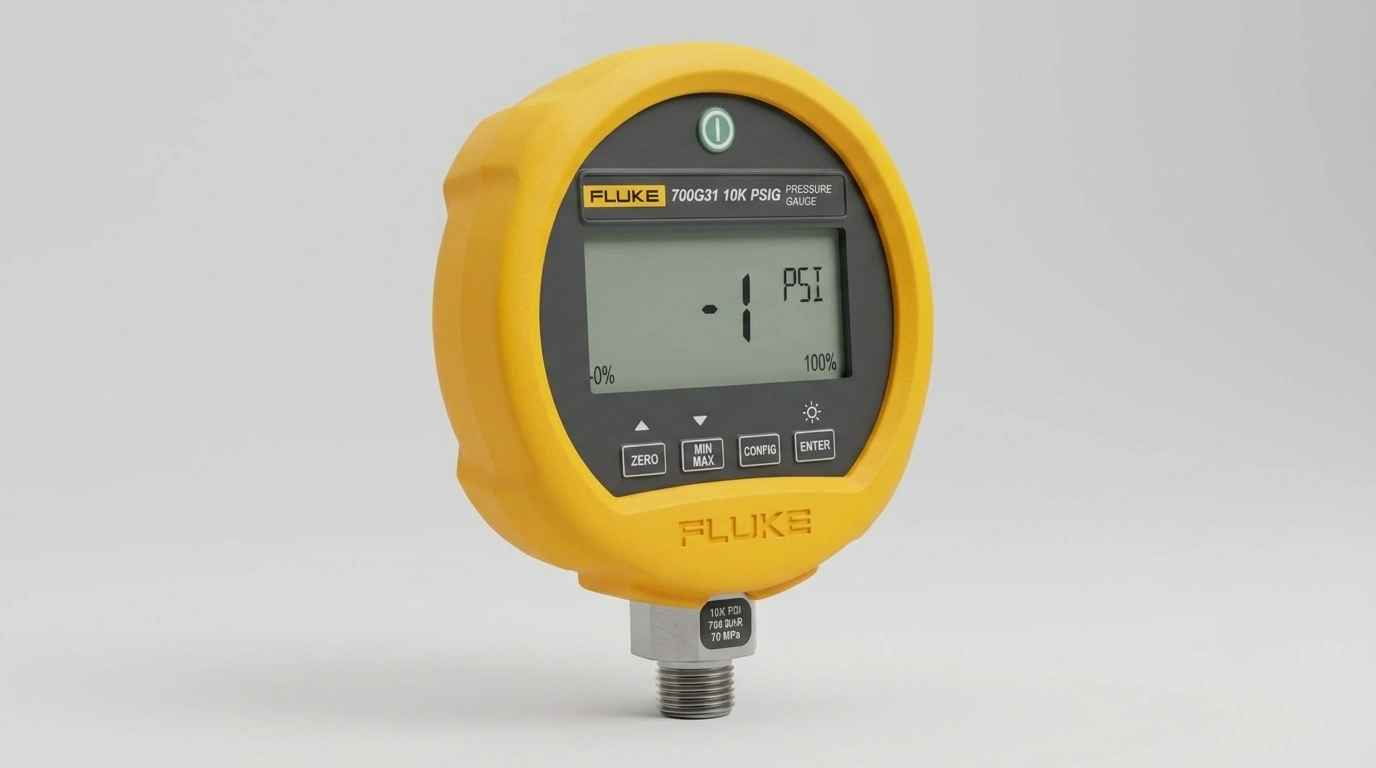
The calibrator connects in series with the transmitter’s 4–20 mA loop. A hand pump applies a known pressure, and the 700G31 displays that applied pressure alongside the transmitter’s actual mA output at the same time.
A basic check usually runs like this:
This is routine work in process plants, oil and gas facilities, and water treatment systems – anywhere a 4–20 mA loop feeds a control system that depends on accurate pressure data.
Some inspections simply can’t happen with equipment powered down, either because production can’t stop or because the fault only shows up while the part is spinning. That’s the situation the Fluke 820-2 was built for.
It’s a handheld LED stroboscope covering a flash range of 40 to 12,500 flashes per minute (FPM). The strobe frequency is matched to the rotational speed of the target part; once the two line up, the spinning component appears to hang motionless, even though it’s running at full speed.
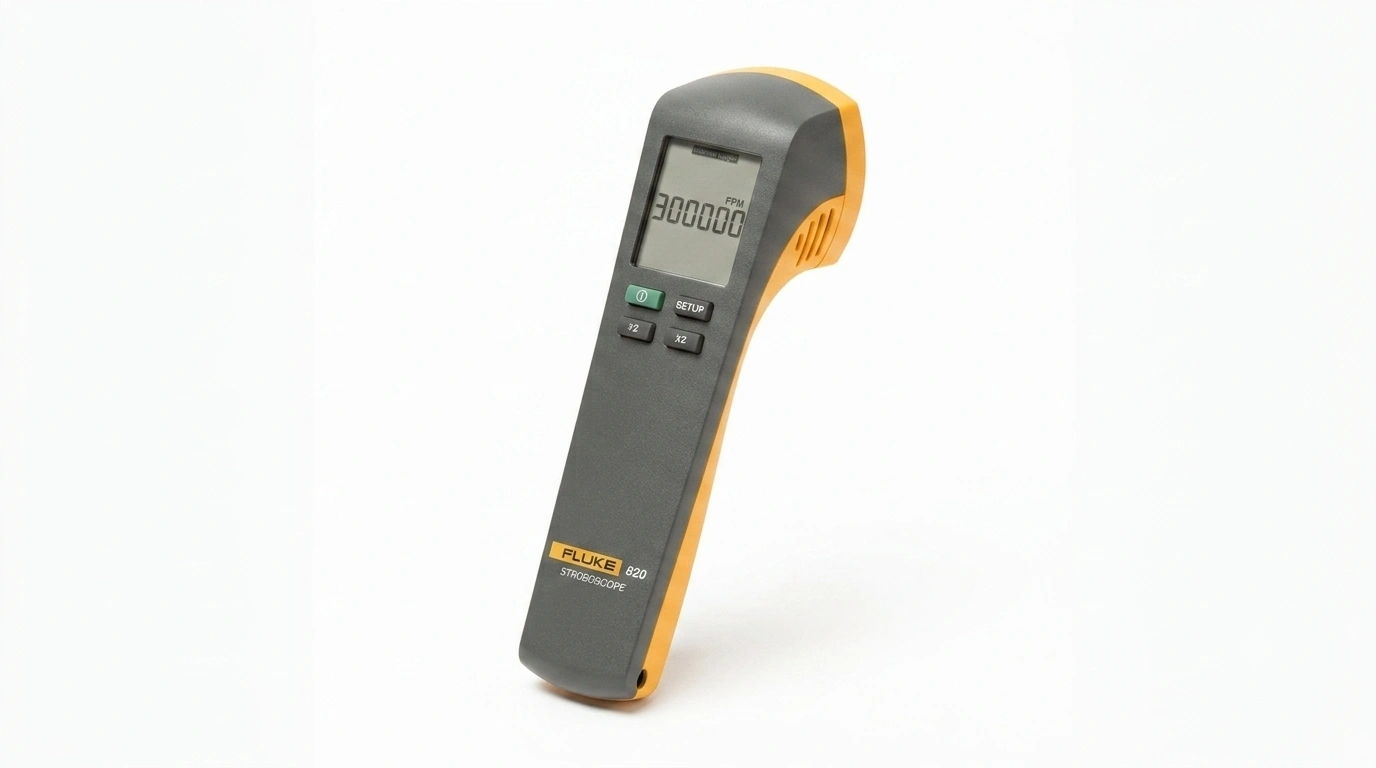
None of these tasks require the pressure range of the 700G31 or the acoustic detection of the ii915. That’s exactly why the 820-2 fills a narrow but genuinely useful niche in rotating equipment maintenance.
| Instrument | Primary Function | Typical Use Case | Range |
| Fluke ii915 | Acoustic leak & discharge imaging | Compressed air audits, corona inspection | 2–100 kHz, 0.5–120 m |
| Fluke 700G31 | Pressure calibration | Transmitter and switch validation | -14 to 10,000 PSI (-0.97 to 690 bar) |
| Fluke 820-2 | Stroboscopic inspection | Rotating machinery inspection | 30 to 300,000 FPM (0.5 to 5000 Hz) |
Test equipment drifts with age and use, the same way a pressure transmitter does. As a general practice, electrical and pressure test instruments are recalibrated annually to stay within NIST-traceable accuracy. NIST itself defines traceability as a property of a measurement result that can be related to a reference through a documented, unbroken chain of calibrations, each contributing to the measurement uncertainty (NIST Policy on Metrological Traceability). In plain terms, that chain is what makes a calibration record defensible during an audit rather than just a sticker on the side of a case.
Pro tip: heavier daily use in dusty or high-vibration environments can justify shortening that interval below the standard twelve months, particularly for the 700G31, since pressure calibrators see repeated mechanical stress from pump connections.
None of these instruments last forever without support. Probes wear, batteries lose capacity, and hand pumps on the 700G31 eventually need seals replaced. Having a reliable source for Fluke parts and Fluke replacement parts matters just as much as picking the right instrument in the first place, especially for teams that can’t afford a tool to sit idle waiting on a part.
Zancot carries the Fluke ii915, 700G31, and 820-2, along with automation components from Siemens, Allen-Bradley, ABB, and Schneider Electric. Teams weighing acoustic imaging against pressure calibration or stroboscopic inspection can browse current stock and compare specs directly on the site before ordering.
What does the Fluke ii915 actually detect?
It detects ultrasonic sound sources – compressed air and vacuum leaks, and partial electrical discharge (corona) – and displays them as a visual overlay on a live image.
Is the Fluke ii915 rated for use inside energized electrical panels?
No. It’s not a CAT-rated measurement instrument. It’s designed for standoff inspection, not direct-contact electrical testing.
How is the Fluke 700G31 different from a standard pressure gauge?
A standard gauge only shows pressure. The 700G31 simultaneously displays applied pressure and the transmitter’s 4–20 mA output, which is what allows a direct zero/span check in one step.
What is the Fluke 820-2 used for besides motors?
Beyond motors and pumps, it’s commonly used for conveyor belt tracking checks and fan blade inspection, since both involve fast rotation that’s hard to inspect visually while running.
How often should Fluke test instruments be recalibrated?
Typically once a year for electrical and pressure test equipment, in line with NIST-traceable calibration practices, though heavy use in harsh environments can call for shorter intervals.
Compare the Fluke ii915 acoustic imager, 700G31 pressure calibrator, and 820-2 stroboscope. Learn specs, safety, and how to choose the right industrial tool.
Master PLC troubleshooting and VFD fault diagnosis with this step-by-step checklist. Learn to check power supplies, decode status LEDs, and isolate I/O issues fast.

Reduce unplanned industrial downtime with this complete PLC maintenance checklist. Cover VFD heat management, HMI lifespan checks, and critical spare parts planning.